Wednesday, June 2, 2010

Free Speech Campaigners in London Protest Against Continued Persecution of Jailed Editor


logologo logo logo

For immediate release – 2 June 2010

Free Speech Campaigners in London Protest Against Continued Persecution of Jailed Editor

Freedom of expression campaigners will protest on Thursday 3 June outside the Azerbaijani embassy in London, calling for an end to the persecution of jailed journalist Eynulla Fatullayev.

Amnesty International UK, ARTICLE 19, English PEN and Index on Censorship will also hand in a letter to the embassy – signed by key literary figures including Monica Ali, Alan Ayckbourn, William Boyd, and Philip Pullman - calling for Fatullayev’s immediate release and for new politically-motivated charges against him to be dropped.

Newspaper editor Fatullayev, 33, is currently serving an eight-and-a-half year prison sentence based on trumped-up charges of terrorism and defamation. In April this year the European Court of Human Rights (ECtHR) ruled that he had been wrongfully imprisoned for exercising his right to freedom of expression and that he should be immediately released.

Despite being a party to the European Convention on Human Rights, the Azerbaijan authorities responded by questioning the court’s authority. Chingiz Esgerov, Azerbaijan’s representative to the ECtHR, argued that “the ECtHR has no authority to give orders to the courts of other countries” and “the country’s legislation does not envision the release of a prisoner only on a basis of the ECtHR.”

After the ECtHR began reviewing his case, Eynulla Fatullayev was further accused of possessing illegal drugs - a charge widely believed to have been fabricated in order to keep him in prison.

In March Eynulla’s father received a death threat for speaking out about his son. This is the third of such threats he has received.

Eynulla Fatullayev received an honourable mention before an audience of the UK’s leading journalists at last night’s Amnesty International Media Awards. In 2009 he was the recipient of the Amnesty International Special Award for Journalism Under Threat.

Amnesty International UK Director Kate Allen said:

“The continuing imprisonment and persecution of Eynulla Fatullayev brings shame on Azerbaijan. It’s amazing that the authorities are so scared of the words of one journalist that they would damage their international standing in this way, even questioning the authority of the European Court of Human Rights.”


ARTICLE 19 Executive Director Agnès Callamard said:

“It is extremely disconcerting that Emin Fatullayev has received death threats for speaking out on behalf of his son. The Azerbaijani Government has the duty to ensure the safety and security of its citizens. They should publicly condemn such threats, investigate them thoroughly, and provide adequate protection to Emin Fatullayev.”

Chair of the Writers in Prison Committee and Deputy President of English PEN Carole Seymour-Jones said:

“Eynulla Fatullayev is just a journalist doing his job. He should be released immediately and these politically-motivated charges against him should be dropped.”

John Kampfner, Chief Executive of Index on Censorship said:

“Freedom of expression is a fundamental human right which journalists, human rights defenders and all of us should be able to exercise openly and without fear of reprisals. Azerbaijan must fulfil its international obligations to guarantee this right.”

The persecution of journalists such as Eynulla Fatullayev is commonplace in Azerbaijan. The authorities have curtailed freedom of expression and have shown persistent hostility towards independent and opposition media. Journalists continue to be harassed, threatened, attacked and imprisoned for conducting their professional activities. Defamation and false charges are increasingly used to silence critical voices.


NOTES TO EDITORS:

• Demonstration details:
What: Protesters with placards demonstrating outside embassy and handing in letter to ambassador
When: 12 noon to 1pm, Thursday 3 June
Where: Opposite the Azerbaijan Embassy, 4 Kensington Court, London, W8 5D
• For more media information and interviews please contact:
§Rebecca Vincent, ARTICLE 19 Azerbaijan Advocacy Assistant, 0207 324 2509
www.article19.org
Steve Ballinger, Amnesty International UK media unit, 020 7033 1548, Out of hours: 07721 398984, www.amnesty.org.uk
Robert Sharp, English PEN Campaigns Manager, 0207 324 2538, Out of hours: 07790 420011
www.englishpen.org
Padraig Reidy, Index on Censorship News Editor, 020 7324 2526, Out of hours: 07947 242 476
www.indexoncensorship.org

Tuesday, June 1, 2010

ISRAEL: Israel needs to heed international calls for free flow of information‏

ISRAEL: Israel needs to heed international calls for free flow of information

ARTICLE 19 is calling for an open, international, independent and impartial investigation into the use of lethal force by the Israeli Defence Forces which resulted in a number of deaths onboard the Gaza-bound flotilla on 31 May.

The blocking of all communication channels, including mobile phones, shortly after the assault, followed by the arbitrary detention of journalists, human rights monitors and others who were travelling onboard the flotilla, are evidence of censorship and a news blackout by Israeli state authorities. Such actions curtail the free flow of information, as protected by Article 19 of the International Covenant on Civil on Political Rights to which Israel is party.

The one-sided information originating from official Israeli sources on the circumstances surrounding the assault and the deaths restricts the right to information and minimises the possibilities for international public scrutiny of the actions of the Israeli Defence Forces and thus for accountability.

As early as 1946, at its very first session, in the UN General Assembly adopted Resolution 59(I) which states that “Freedom of information is a fundamental human right and ... the touchstone of all the freedoms to which the United Nations is consecrated.”

Freedom of expression, including access to information, is also essential to the realization of what is commonly referred to as the “right to truth.” The UN Commission on Human Rights, at its 61st session, adopted Resolution 2005/66, which ‘‘Recognizes the importance of respecting and ensuring the right to the truth so as to contribute to ending impunity and to promote and protect human rights.’’

The investigation into the assault against the flotilla must be open, international, impartial and independent. It should focus on the legality of the Israeli assault in international waters and thus the legality of the blockade, and the proportionality of the use of force. An international investigation team should be allowed access to government-held information on the matter, as well as direct access to those involved in the assault, witnesses and those subsequently detained.

NOTES :

• For more information: please contact Mona Samari, +44 (0) 7515 828 939, mona@article19.org


----------------------------------Background news:
more info.

The Siasat Daily2010-06-01
Gaza, June 01: Israeli commandos on Monday attacked a high-profile Gaza-bound aid flotilla, killing up to 19 people and triggering in its wake a wave of outrage across the globe. The convoy of six ships was assaulted in the early hours after commandos slithered down from helicopters and confronted passengers on board, mostly pro-Palestinian activists.


http://www.examiner.com/x-27745-SF-Headlines-Examiner~y2010m5d31-Israel-Defense-Forces-IDF-Hamas-statements-on-Gaza-flotilla-violence

Israel Defense Forces (IDF), Hamas, activists statements on Gaza flotilla violence

Israel has met with protests around the world and here in the San Francisco Bay Area following its raid on a flotilla of boats headed for the Gaza Strip. Click here for a slideshow of photos related to the incident

Israel says it was defending itself after those on one of the vessels attacked its soldiers. It displayed weapons confiscated by those on board and showed video of the soldiers being attacked.

The activists onboard say that they were attacked by the soldiers after they raised the white flag of surrender and that they were simply trying to bring humanitarian aid to the Gaza Strip, which has been under a blockade imposed by Israel and Egypt since Hamas took over Gaza in 2007.

The public relations war is being fought by activists around the world through video and protests. Click here for two sets of videos with different points of view on what happened. The Israeli Consulate in San Francisco also posted YouTube videos from IDF on its Web site.

Below is the official statement from the Israel Defense Forces (IDF), after that is the official statement from Hamas. Following that is a statement from the San Francisco Bay Area based Free Palestine Movement organization.


Tuesday, May 18, 2010

Tunisia:Harassment, Intimidation of Human Rights Defenders and Journalists

17 May 2010

Tunisia: Detention of Prisoners of Opinion, Harassment, Intimidation of Human Rights Defenders and Journalists; Internet Censorship and Lack of Independence of the Judiciary


Statement delivered by ARTICLE 19 on 12 May to the 47th session of the African Commission on Human and Peoples Rights (ACHPR).

ARTICLE 19 is gravely concerned by the continued arrests, detentions and intimidations of media practitioners, human rights defenders and legal practitioners in Tunisia.

Since 2005, prior to the World Summit for the Information Society (WSIS) held in Tunisia, ARTICLE 19 joined other members of the International Freedom of Expression eXchange (IFEX) to form the 20-member Tunisia Monitoring Group (TMG).

The TMG seeks to highlight the following violations:
• Detention of Tunisian prisoners of opinion, the use of administrative sanctions to punish dissident views and the obstruction of the emergence of an independent judiciary
• Restrictions on freedom of association for peaceful purposes and the right of all civil society groups to be legally established and hold meetings in Tunisia
• Censorship of the internet, the arts, books and periodicals by legal, administrative and extrajudicial means in Tunisia.

The TMG just concluded its sixth mission to Tunisia from 25 April to 6 May 2010.

We found that despite the existence of a legislative and institutional framework guaranteeing human rights and fundamental freedoms, and the impressive economic growth, large scale human rights violations continue to take place with impunity in Tunisia.

ARTICLE 19 and other members of the TMG wish to highlight the plight of local journalists who are arrested, intimidated, harassed by plainclothes police, denied licenses to operate independent newspapers or broadcast outlets, and taken to court regularly over frivolous charges.

A notable case is that of Fourti Salah, who has been waiting for 23 years to get a reply to his application for a radio frequency. He ended up forming the Syndicate of Tunisian Free Radios with more than 20 other journalists who have no other recourse while individuals close to the government are speedily granted frequencies.

On 3 May, while the international community celebrated World Press Freedom Day, Tunisian journalists continued to face direct and indirect harassments and censorship.

Néji Bghouri, president of the legitimate National Syndicate of Tunisian Journalists (SNJT) was prevented by the police from holding a peaceful demonstration in front of the Ministry of Communications. He intended with some other colleagues to mark the day and call the attention of the government to the case of the journalist Fahem Boukadous of Al-Hiwar Al-Tunisi satellite television station, who has been sentenced to four years imprisonment for having reported on the demonstrations in the mining area of Gafsa. He returns to court on 18 May.

Other notable cases include Radio Kalima which was attacked, their material seized and their offices closed.

Zouheir Makhlouf, a contributor to news website Assabil Online and the opposition weekly Al-Mawkif spent over three months in jail for a video he produced on the pollution in the industrial zone of the Nabeul region. He was viciously beaten by police in April after being released in February.

In addition, human rights defenders and journalists are constantly harassed and intimidated at Tunis Carthage airport, unduly searched and sometimes stopped from travelling. Lotfi Hajji, correspondent of Al Jazeera was recently harassed at the airport of Tunis Carthage on his way back from Doha, as are other journalists and rights activists routinely.

Besides the violations of freedom of expression, the independence of the judiciary is hampered by arbitrariness.

The case of the judge Mokhtar Yahyaoui is an illustration of the lack of independence of the judiciary. Since 2001, Yahyaoui has been victimized for having requested a more independent working environment for the judiciary. Since then, he has been denied all basic rights such as the right to have a passport for himself and his children who are studying in Europe, his letters are read, and he is under constant surveillance. His colleagues, family and friends are intimidated and moved hundreds of kilometers away from Tunis for showing solidarity.

ARTICLE 19 and other TMG members urge the ACHPR, and the Special Rapporteur on Freedom of Expression and the Special Rapporteur on Human Rights Defenders to:
• Request the Tunisian government to stop the harassment, intimidation of journalists, human rights defenders and the use of administrative sanctions to silence dissenting views
• Stop the use of insidious tactics and instruments and sophisticated ploys to block the emergence of an independent judiciary
We further urge the ACHPR to:
• Conduct a fact finding mission to Tunisia in order to assess the critical situation of human rights defenders, legal and the media practitioners
• The mission should include civil society organizations and meet with all stakeholders in Tunisia.

This statement is endorsed by the Federation of African Journalists and the International Federation of Human Rights (FIDH).


FURTHER INFORMATION:

• For more information please contact: Amadou Kanoute, Amadou@article19.org +221 33 860 12 62

Sunday, May 16, 2010

Journalists under threat from suicide bombs, abductions and censorship

12 May 2010

Journalists under threat from suicide bombs, abductions and censorship


Pakistani journalists continue to be pushed to the edge, by suicide attacks, kidnappings and murder, as well as government officials making direct attacks on critical journalists, reports the Pakistan Press Foundation (PPF). Access to information has also been undermined with state orders to halt BBC Urdu-language broadcasts.


In a joint action spearheaded by Reporters Without Borders (RSF), 26 IFEX members and the Pakistani Federal Union of Journalists (PFUJ) have called on the leaders of the Taliban, jihadist movements and Al-Qaeda to stop suicide bombings targeting public gatherings, which result in the deaths of innocent civilians and media workers.

Pakistani journalists cover events first-hand, but that does not mean they "support any specific politician or public figure," says the joint action. The bombings have made Pakistan one of the most dangerous countries in the world for the press.

Journalists and their families are also not entirely safe in their own homes. Azaz Syed was out at work when gunmen riddled the front door of his house with bullets early on 7 May, says PPF. An investigative reporter for the English-language private television channel Dawn News, Syed has been working on stories involving the armed forces, intelligence agencies and militant organisations, as well as political parties and influential personalities in Pakistan. This is the second attack on his residence.

Meanwhile, on 27 April, the Pakistan Electronic Media Regulatory Authority (PEMRA) ordered 24 FM radio stations to stop broadcasting BBC Urdu news bulletins because they allegedly violated the terms of their licenses, reports PPF. BBC says it believes the stations have completed all the required paperwork for PEMRA to lift the ban.

In a separate deadly episode in North Waziristan, militants executed a former Pakistani intelligence official who was kidnapped along with documentary filmmaker Asad Qureshi, report the Committee to Protect Journalists (CPJ) and the International Press Institute (IPI). The official's body was found on 30 April, after going missing with the filmmaker and a second official on 26 March. Qureshi, a British citizen of Pakistani origin, was on his way to interview Taliban leaders.

More recently, 30-year-old journalist Ghulam Rasool Birhamani was reported missing on 9 May; his body was found the next day with torture marks and fatal head injuries, reports PPF. A reporter for the daily "Sindhu Hyderabad", Birhamani had recently received threats from the Lashari tribe for reporting on the marriage of an underage girl from the tribe.

Tuesday, April 27, 2010

Photos of extrajudicial killings banned

14 April 2010

Photos of extrajudicial killings banned


Art can be a powerful medium for ideas and information, to challenge repression. A photo exhibit about extrajudicial executions in Dhaka, Bangladesh, was banned on 22 March, report Human Rights Watch, Reporters Without Borders (RSF) and ARTICLE 19. The ban was revoked a week later after the gallery owner, who received death threats, appealed the decision in court.


The exhibit, "Crossfire," by Shahidul Alam, features photographs and installations relating to alleged extrajudicial killings by the Rapid Action Battalion (RAB), a military-dominated crime-fighting force. Officers often say these are "crossfire" killings in which they act in self defense or to stop alleged criminals from escaping.

Since RAB was established in 2004 it has killed more than 500 people. No one has been prosecuted for the killings. Many victims of the "cross-fire" killings have instead either been tortured to death or summarily shot. At least four journalists have been tortured by RAB members since 2007, says RSF.

Drik gallery owner and well-known photographer, Shahidul Alam, received death threats days after the exhibit was shut down. Police surrounded the gallery until they were ordered by the government to withdraw on 31 March.

ARTICLE 19 featured the Dhaka exhibit in the March edition of its "Artist Alert", which highlights cases of artists worldwide whose right to freedom of expression has been trampled. The bulletin also mentions the award-winning Iranian filmmaker Jafar Panahi who was detained along with his wife, daughter and 15 guests by Iranian security on 1 March. His wife, daughter and guests have been released, but Panahi continues to be held incommunicado in Tehran's Evin prison.

Friday, April 2, 2010

China: US companies refuse to bow to online surveillance

31 March 2010

US companies refuse to bow to online surveillance


US Internet companies withdraw their business from Chinese censors;  foreign journalists' email accounts hacked.
US Internet companies withdraw their business from Chinese censors; foreign journalists' email accounts hacked.
via IPI

Two US companies are defying Chinese censors. Internet company GoDaddy announced on 24 March that it will no longer sell websites with Chinese domain names because of the extreme controls demanded by Chinese authorities, says Reporters Without Borders (RSF). Two days earlier, Google confirmed that it would no longer censor the Chinese version of its search engine, report RSF, the Committee to Protect Journalists (CPJ) and Human Rights Watch. Google will be redirecting viewers to its uncensored Hong Kong site.


Google also plans to monitor and publicise any attempts at censorship of this site by Chinese authorities. The site has been subjected to intermittent censorship in recent days, but is back to normal. On 12 January, Google first announced that it was going to withdraw from China unless it could operate its search engine free of any kind of censorship or restrictions. The company came to this decision after discovering "highly sophisticated and targeted attacks" on Gmail users who are human rights activists, which were traced back to Chinese hackers.

Two years ago, only five percent of Chinese Internet users were aware that the Web they saw was censored, reports CPJ. But now there is much greater awareness and news reports about Google have acted as a "wake-up call for Chinese netizens." Now, millions of people in China who access Google will be able to see the search results their government does not want them to see.

"Google's decision to offer an uncensored search engine is an important step to challenge the Chinese government's use of censorship to maintain its control over its citizens," said Human Rights Watch.

Chinese authorities have requested that individuals and companies wanting to register a website must now provide them with copies of photo identification and business licences, and fill out and sign forms, explained GoDaddy. The company's existing clients were expected to comply with the rules; only 20 percent provided the documents. "We are concerned about the security of the individuals affected by the new requirements," said GoDaddy. "We are concerned about the chilling effects we believe the requirements could have on new domain name registrations." The Internet company also said it had been targeted by dozens of cyber-attacks this year and blamed Chinese authorities.

More than a dozen Chinese government agencies work to implement laws, regulations, policy guidelines and other legal tools to try to keep information and ideas from the Chinese people, reports Human Rights Watch. Many companies, including Google, Yahoo! and Microsoft, have supported this system by blocking terms they think the Chinese government would want them to censor.

Meanwhile, the Yahoo! email accounts of at least 10 foreign journalists based in China and Taiwan have been targeted by hackers in recent weeks, reports RSF.

http://www.ifex.org/china/2010/03/31/hackers_censors/

Honduras : Five journalists killed in one month

31 March 2010

Five journalists killed in one month


March has been a deadly month for Honduran journalists, with five  killed.
March has been a deadly month for Honduran journalists, with five killed.
via IPI


In a highway ambush, two journalists were shot to death in eastern Honduras on 26 March, report the Comité por la Libre Expresión (C-Libre), Reporters Without Borders (RSF), ARTICLE 19 and other IFEX members. This brings the number of journalists murdered in Honduras this year to five; all killed this past month.

Radio journalists José Bayardo Mairena Ramírez, 52, and Manuel Juárez, 55, had just finished hosting a radio programme and were driving from the city of Catacamas to Juticalpa. Gunmen shot at them from another car, riddling their car with bullets.

Both journalists worked on the program "Así es Olancho" for R.Z. Television's Channel 4, and Radio Excélsior, where Bayardo Mairena was the manager. Bayardo Mairena opposed the 2009 coup d'état and was known for his sympathy to the "resistance" movement, reports ARTICLE 19.

The head of the Honduran Press Association urged President Porfirio Lobo Sosa to "rein in" these killings of journalists, says RSF.

Journalists, human rights defenders and opposition activists have been regularly targeted in the last eight months, says ARTICLE 19, but the situation has especially deteriorated since the swearing-in of President Lobo early this year. Effective legal remedies and protection policies at the national level are lacking.

There have also been threats against the staff of Radio Uno, a privately owned opposition station in San Pedro Sula, reports RSF. Despite being monitored by the army since last June's coup, the station continues to take risks by covering human rights violations.

http://www.ifex.org/honduras/2010/03/31/fifth_killed/

UN resolution on defamation of religions goes against free speech

31 March 2010

UN resolution on defamation of religions goes against free speech, say IFEX members


Despite protests from 40 IFEX members, UN adopts resolution on  defamation of religions.
Despite protests from 40 IFEX members, UN adopts resolution on defamation of religions.
via Index on Censorship

Forty IFEX members sent a joint statement, coordinated by ARTICLE 19, to the United Nations Human Rights Council (UNHRC) this month to protest resolutions on defamation of religion, arguing that any decision to combat defamation of religions contradicts the right to freedom of expression. The joint action also urged the UNHRC to reject any resolutions to add "complementary standards" to the International Convention on the Elimination of All Forms of Racial Discrimination (ICERD). Instead, IFEX members say that established international human rights guarantees on freedom of expression must be upheld to deal with global challenges of violence, discrimination and hatred on racial and religious grounds.


A separate joint letter coordinated by ARTICLE 19 and the Cairo Institute for Human Rights Studies (CIHRS), signed by 47 civil society organisations, including four IFEX members, was also sent to member states of the UNHRC in advance of the meeting on the resolution. It argued that international human rights standards should protect individuals and groups from discrimination and harassment on the basis of their religion or ethnicity. And belief systems should not be shielded from debate or criticism.

Any draft resolution on defamation of religions would be counterproductive to its goals of promoting equality and non-discrimination of individuals on the basis of their religion by supporting state practices which discriminate against religious minorities, dissenting voices and non-believers, says the joint action signed by 40 IFEX members. Efforts to codify defamation of religions will have negative long-term effects on freedom of expression.

In addition, amendments to the ICERD are unnecessary, say the 47 civil society organisations. "What is needed today is appropriate implementation of existing standards and political will to fight discrimination and hatred against individuals or groups, based on their religion." ICERD changes would lead to a binding international agreement on "defamation of religions."

Nonetheless the UN did adopt a resolution on 25 March, proposed by Pakistan on behalf of the Organisation of Islamic Conference (OIC), on "combating defamation of religions," with 20 states voting in favour. This resolution also goes against the International Covenant on Civil and Political Rights (ICCPR), which "only prohibits advocacy of national, racial or religious hatred that constitutes incitement to violence, discrimination and hatred," says the joint letter by the 40 IFEX members.

In related work, on 11 March, ARTICLE 19, Amnesty International, CIHRS and the Egyptian Initiative for Personal Rights submitted a brief to the Indonesian constitutional court, stating that the country's laws, which permit punishing the "abuse or defamation of religions," are contrary to international human rights law. The Indonesian criminal code delivers a five-year prison sentence to anyone who publicly expresses views or engages in actions which are considered "abuse or defamation" of select religions in the country.

And on 10 March, Freedom House held a panel discussion in Geneva with human rights defenders from Indonesia, Nigeria and the United States to discuss options for combating religious discrimination without restricting free speech. Resolutions calling on governments to ban speech considered offensive to some religious believers have been passed each year since 1999, reports Freedom House. The resolutions have not decreased acts of religious discrimination and intolerance, while moderate voices have been ignored in the debate. As well, legal measures to protect religious beliefs from criticism are counterproductive to the goal of promoting religious tolerance.

http://www.ifex.org/international/2010/03/31/defamation_religions/

Thursday, April 1, 2010

UN Human Rights Council: ARTICLE 19 Welcomes Decrease in Support for “Defamation of Religions”

29 March 2010

UN Human Rights Council: ARTICLE 19 Welcomes Decrease in Support for “Defamation of Religions”

Votes at the UN Human Rights Council over the last two days have shown a decrease in support for the concept of “defamation of religions”. ARTICLE 19 joins its voice to those of many civil society organisations around the world who have welcomed this positive move. This latest result further consolidates those observed in 2009 at the Durban Review Conference and the September session of the HRC.

In the vote on the resolution on combating “defamation of religions”, 20 states voted in favour, 17 states voted against and eight states abstained. Three states withdrew their support and six voted against the defamation resolution, including Argentina and Zambia who voted “no” for the first time.

In the run-up to the vote, many governments and non-governmental organisations campaigned against the resolution on the basis that it violates international human rights law on freedom of expression and other rights. While the resolution’s adoption is disappointing, the close vote indicates a significant decrease in the political support for such resolutions over previous years and raises the hope that in the future, a more constructive approach will emerge.

The Human Rights Council also adopted, without a vote, a technical and procedural resolution on the elaboration of complementary standards to the International Convention on the Elimination of All Forms of Racial Discrimination. The resolution underlines “the imperative need for the Ad Hoc Committee on the Elaboration of Complementary Standards to the ICERD to elaborate complementary standards to the ICERD in accordance with paragraph 199 of the Durban Programme of Action”. The resolution decides, “to remain seized of this priority issue” and also takes note of the report of the chairperson of the Committee and sets the dates for the Committee’s next session (29 November to 10 December 2010).

The wording of this resolution is a significant improvement on an earlier proposal which requested the committee to elaborate upon additional protocols to the ICERD. Such proposals were intended to lead to the development of a new binding international agreement on “defamation of religions”. In the opinion of many states and non-governmental organisations, long established international human rights guarantees on freedom of expression and equality are adequate to deal with global challenges of violence, discrimination and hatred on racial and religious grounds. The extension of existing norms would do little to prevent these problems, while having a substantial impact on the freedom of expression and religion.

NOTES

• The following states voted for the resolution on defamation of religions: Bahrain, Bangladesh, Bolivia, Burkina Faso, China, Cuba, Djibouti, Egypt, Indonesia, Jordan, Kyrgyzstan, Nicaragua, Nigeria, Pakistan, Philippines, Qatar, Russian Federation, Saudi Arabia, Senegal and South Africa (20).
• The following states voted against the resolution: Argentina, Belgium, Chile, France, Hungary, Italy, Mexico, Netherlands, Norway, Republic of Korea, Slovakia, Slovenia, Ukraine, United Kingdom, United States of America, Uruguay and Zambia (17).
• The following states abstained in the vote: Bosnia and Herzegovina, Brazil, Cameroon, Ghana, India, Japan, Madagascar and Mauritius (8). Angola and Gabon were absent at the vote.
• Letter of the 47 organisations: http://www.article19.org/pdfs/letters/letter-from-civil-society-organizations-to-state-representatives-defamation-.pdf
• IFEX Joint Action statement: http://www.ifex.org/international/2010/03/25/hrc_defamation_ja/
• For more information please contact: Sejal Parmar, Senior Legal Officer sejal@article19.org +44 20 7324 2500

Honduras: Another Two Journalists Killed as Crackdown on Free Expression Intensifies

29 March 2010

Honduras: Another Two Journalists Killed as Crackdown on Free Expression Intensifies

ARTICLE 19 expresses its deep concern at the recent killings of two more journalists – José Bayardo Mairena Ramírez and Manuel Juárez – on 27 March in the northern territory of Honduras. This brings the total number of journalists killed in similar circumstances in Honduras to five.
The killings highlight a severe deterioration in the respect and protection for human rights, including freedom of expression, in Honduras since the Presidential coup of June 2009. Journalists, human rights defenders, and opposition activists have been widely targeted throughout the last eight months but the situation appears to have deteriorated further since the beginning of the year and the swearing-in of Porfirio Lobo Sosa as President.

Both journalists worked for two local radio stations in northern Honduras. Bayardo Mairena was a radio talk host, with more than twenty years’ experience, while Juárez had worked as his assistant for many years. Opposed to the 2009 coup, Bayardo Mairena was known for his sympathy to the “resistance” movement. He had played a significant role in breaking the information monopoly of the pro-coup media last year. Bayardo Mairena´s programmes included a news show “This is Olancho” on Channel 4 RZ, Excelsior Television, where he was also the manager. He was based in Olancho, hometown of ousted President Manuel Zelaya.

According to official reports, the car in which both men were travelling was attacked on the road between Juticalpa and Catacamas, about 200 kilometres east of the capital, Tegucigalpa. Local radio stations reported that Bayardo Mairena’s car was shot 21 times.

There have been a number of other events in recent weeks. On 1 March, Joseph Hernandez Ochoa, a journalist based in Tegucijalpa, was shot dead and journalist Karol Cabrera was injured in the same incident. On 11 March, David Meza Montesinos was killed in La Ceiba by a gun shot. On 14 March, in Tocoa Columbus, Nahúm Palacios Arriaga, a journalist and director of Aguan TV Channel 5 was also killed. He had been granted “precautionary measures” by the Inter-American Commission on Human Rights in August 2009, along with dozens of other Honduran citizens. This is a mechanism to identify individuals at risk in an attempt to prevent them from being further targeted or harmed.

These cases are part of a long list of abuses that have taken place throughout Honduras over the last nine months.

“The similarity in the methods used in these attacks points towards a systemic pattern of repression and is clearly aimed at terrorising those who may be critical of the Government or other powerful players,” comments Dr Agnès Callamard, ARTICLE 19 Executive Director.

“We are working under intense pressure our reporters face constant harassment,” explains Johnny Lagos, editor of the opposition newspaper El Libertador. “The opposition press and Hondurans in general are victims of repression and misinformation,” he adds.

In February 2010, President Lobo endorsed the Chapultepec Declaration on Freedom of Expression. However the persistence of the adverse environment for freedom of expression faced by journalists, as well as the constant harassment against human rights activists and social leaders, demonstrates the absence of effective protection policies implemented by the new government.

Effective legal remedies at national level are lacking and there are numerous obstacles to the implementation of protection measures requested by the Inter American Commission of Human Rights. This helps to create a hostile environment for human rights protection, in general, and freedom of the press, in particular.

An amnesty law, like the one proposed by President Lobo, would almost certainly guarantee impunity for perpetrators of abuse and would undermine any attempts at reconciliation in the country.

“For a genuine and enduring process of reconciliation to take place, the investigation and punishment of all human rights violations during the Coup and it its aftermath are essential for establishing a real democratic regime,” comments Callamard.

ARTICLE 19 expresses condolences to the families of all the journalists who have died or been injured needlessly and offers our solidarity to the journalist community.

ARTICLE 19 calls on the Honduran State to adequately investigate these cases and to bring the perpetrators to justice. These investigations must take into account the concern that these journalists were killed because of their profession and exercise of their right to freedom of expression.

ARTICLE 19 urges the Honduran Government to guarantee the right to freedom of expression and to ensure all the necessary security measures to media workers trying to exercise this right, in accordance with its international human rights obligations.

Furthermore, we call on President Lobo to put the investigation and prosecution of human rights violations at the heart of an inclusive dialogue for national reconciliation, and to adopt all necessary measures to guarantee justice for all victims.

Finally, ARTICLE 19 calls upon the international community to urgently address the situation according to international law. The investigation and punishment of all human rights violations should be a central element for the reincorporation of the Honduran State into the OAS mechanisms.

NOTES
• For more information, please contact Ricardo González, ricardo@article19.org , +52 55 1054 6500

Thursday, March 25, 2010

Indonesia: Human Rights NGOs Argue "Defamation of Religions" Law Contravenes Freedom of Expression, Freedom of Religion and Equality In Legal Brief to

Indonesia: Human Rights NGOs Argue “Defamation of Religions” Law Contravenes Freedom of Expression, Freedom of Religion and Equality In Legal Brief to Constitutional Court

Indonesia’s laws prohibiting and punishing the “abuse or defamation of religions” are contrary to international human rights law, according to the amicus curiae brief submitted by ARTICLE 19, Amnesty International, the Cairo Institute for Human Rights Studies and the Egyptian Initiative for Personal Rights to the Indonesian Constitutional Court on 11 March 2010.

The organisations submitted the brief to the Indonesian Constitutional Court in the judicial review of Law Number 1/PNPS/1965 concerning the prevention of religious abuse and/or defamation. The 1965 law prohibits “interpretation and activities are in deviation of the basic teachings” of “a religion adhered to in Indonesia”, which includes some faiths with followers in the country but not others. The Indonesian Criminal Code imposes a five year prison sentence on anyone who publicly expresses views or engages in actions which are considered “abuse or defamation” of these religions.

In the opinion of the organisations, the laws violate Indonesia’s international human rights obligations to respect and protect freedom of expression, freedom of thought, conscience and religion, and the right to equality. The organisations emphasise that the laws are fundamentally incompatible with the authoritative interpretation of international human rights law by international and regional human rights bodies and mechanisms, including the UN Special Rapporteurs on freedom of opinion and expression and on freedom of religion or belief. The organisations further argue that the laws go against regional human rights standards and practices.

The organisations have submitted the brief in the hope that the Constitutional Court will rescind Indonesia’s defamation laws as a first step towards ensuring full adherence to Indonesia’s international legal obligations, including respect for and protection of the human rights to freedom of religion or belief and freedom of expression, and ending discriminatory policies and practices against certain minority faiths.

NOTES :

• For the brief of 11 March 2010 see: http://www.article19.org/pdfs/analysis/judicial-review-of-law-number-1-pnps-1965-concerning-the-prevention-of-relig.pdf
• For the letter of 47 organisations of 11 March 2010 see: http://www.article19.org/pdfs/letters/letter-from-civil-society-organizations-to-state-representatives-defamation-.pdf
• For more information please contact: Sejal Parmar, Senior Legal Officer, sejal@article19.org or David Banisar, Senior Legal Counsel, banisar@article19.org +44 20 7324 2500; Yuval Ginbar, Legal Adviser, Amnesty International, +44 20 74135739 yginbar@amnesty.org; Jeremie Smith, Director of Geneva Officer, Cairo Institute for Human Rights Studies js.cihrs@gmail.com; Hossam Bahgat, Executive Director, Egyptian Initiative for Personal Rights hossam@eipr.org


UN Human Rights Council: ARTICLE 19 Calls On HRC Members to Vote Against Proposed Resolution On “Combating Defamation of Religions”

ARTICLE 19 is deeply concerned by a draft resolution on “combating defamation of religions” which has been circulated by the Organisation of Islamic Conference (OIC) at the current, 13th session of the UN Human Rights Council. ARTICLE 19 urges member states of the Human Rights Council to vote against the draft resolution or at least abstain in a vote on its adoption.

I Introduction

1. A draft resolution on “combating defamation of religions” (the “draft resolution”) has been tabled by Pakistan, on behalf of the Organisation of Islamic States, for consideration by the UN Human Rights Council (“the HRC”), which is currently being held in Geneva. The forty-seven member states of the Council are due to consider the draft resolution before the end of this session on 26 March 2010. The subject of the draft resolution is not new within UN human rights bodies. Since 1999, a series of resolutions on combating defamation of religions have been adopted by the UN Human Rights Council and its predecessor, the UN Human Rights Commission, and the UN General Assembly. Indeed, the draft resolution expressly draws influence from earlier resolutions and also makes some changes to the resolution which was adopted by the HRC at its tenth session.

2. These changes are, however, minor in their nature and do not, in any way, diminish the criticisms which ARTICLE 19 and other groups have made against UN resolutions on “combating defamation of religions”. The purpose of this statement is to note the new features that distinguish this draft resolution from previously adopted resolutions of the HRC on the subject and to summarise ARTICLE 19’s ongoing concerns with the adoption of any UN resolution on “combating defamation of religions”.

II New features of the draft resolution

3. A number of new features distinguish the draft resolution from previously adopted resolutions on “combating defamation of religions” of the HRC. It is assumed these changes are supposed to assist in legitimising the concept of “defamation of religions” and to persuade states to adopt the draft resolution. These changes do not improve the draft resolution from an international human rights perspective or make it compatible with international human rights law. For that to happen, at the bare minimum, the very concept of “defamation of religions” itself would need to be eliminated altogether. The new features do demonstrate the clear will of the drafters to situate the draft resolution more directly within the framework of established international human rights law and UN human rights initiatives, and, in so doing, to legitimise and entrench the concept of “defamation of religions”.

4. First, the draft resolution recalls the Durban Declaration and Programme of Action adopted by the World Conference against Racism, Racial Discrimination, Xenophobia and Related Intolerance held in Durban in 2001, as well as the Outcome Document of the Durban Review Conference held in Geneva in April 2009 (paragraph 6 of the preamble). Yet the Outcome Document of the Durban Review Conference omitted any reference at all to the notion of “defamation of religions”.

5. Second, the draft resolution indicates that the HRC “takes note of the report of the United Nations High Commissioner for Human Rights on possible correlation between defamation of religions and the upsurge in incitement, intolerance and hatred in many parts of the world (A/HRC/13/57) and the report of the Special Rapporteur on contemporary forms of racism, racial discrimination, xenophobia and related intolerance (A/HRC/12/38) presented to the Council at its twelfth session” (paragraph 1).

6. The reliance on both reports for this draft resolution is misleading. Neither of these reports suggests that the notion of “defamation of religions” forms an accepted part of the discourse of international human rights bodies. Indeed, the report of the High Commissioner for Human Rights refrains from making any conclusions which refer to “defamation of religions” and instead makes specific reference to a joint statement by the Special Rapporteur on contemporary forms of racism, racial discrimination, xenophobia and related intolerance, the Special Rapporteur on freedom of religion or belief and the Special Rapporteur on the promotion and protection of the right to freedom of opinion and expression which states that “difficulties in providing an objective definition of the term ‘defamation of religions’ at the international level make the whole concept open to abuse”. Moreover, the Special Rapporteur on contemporary forms of racism, racial discrimination, xenophobia and related intolerance in his above-mentioned report reiterates the recommendation of his predecessor to “encourage a shift away from the sociological concept of the defamation of religions towards the legal norm of non-incitement to national, racial or religious hatred”.

7. Fourth, the draft resolution “trongly condemns … the ban on construction of minarets of mosques … that stand in sharp contradiction to international human rights obligations concerning freedom of religion, belief, conscience and expression” (paragraph 8). State bans on the construction of minarets and mosques may violate the rights of observant Muslims to manifest their religion in public and are contrary to the international (and regional) human rights obligations of states. However, the prohibition and punishment of forms of expression and activities which fall within the notion of “defamation of religions”, such as criticism of religious doctrine, will not assist in responding to such bans on the construction of minarets and mosques which ought to be challenged in courts on the basis of existing human rights protections.

8. Fifth, the draft resolution “ecognizes that the open, constructive and respectful debate of ideas as well as interfaith and intercultural dialogue at the local, national and international levels can play a positive role in combating religious hatred, incitement and violence” (paragraph 17). We are concerned about the use of the word “respectful” in this paragraph: its meaning highly subjective and open to interpretation by state authorities who may seek to inappropriately confine the nature of debates concerning the combating of religious hatred, incitement and violence. ARTICLE 19 suggests that this paragraph should reflect the UN HRC Resolution on freedom of opinion and expression adopted on 12 October 2009 which avoids such language.

9. Sixth, the draft resolution “akes note with appreciation of the High Commissioner to provide further support for the progressive development of international human rights law in respect of freedom of expression and incitement to hatred, discrimination and violence” (paragraph 19). It then “welcomes the OHCHR plans to hold a series of expert workshops to examine legislation, judicial practices and national policies in different regions, in order to assess different approaches to prohibiting incitement to hatred, as stipulated in article 20 of the ICCPR, without prejudice to the mandate of the Ad Hoc Committee on Complementary Standards” (paragraph 20). Both provisions refer to the High Commissioner’s Strategic Management Plan 2010-2011. However, this plan does not anywhere refer to “defamation of religions” and it is clear that the OHCHR’s work shall be based on existing provisions of international law, Articles 19 and 20 of the ICCPR.

10. Seventh, the draft resolution requests the High Commissioner to “continue to build on such initiatives, with a view to contributing concretely to the prevention and elimination of all forms of incitement and its consequences of negative stereotyping of religions and beliefs and their adherents that affects the enjoyment of human rights of concerned individuals and communities” (paragraph 20). International human rights law protects individuals and groups, but not religions or beliefs. The draft resolution’s reference to “negative stereotyping of religions and beliefs” is therefore unacceptable from an international human rights law perspective.

11. Eighth, “equests the Special Rapporteur on contemporary forms of racism, racial discrimination, xenophobia and related intolerance to report on all manifestations of “defamation of religions”, and in particular on the ongoing serious implications of Islamaphobia, on the enjoyment of all rights by their followers, to the Council at its fifteenth session” (paragraph 21). The Special Rapporteur should be requested to report on best practices to address advocacy of national, racial or religious hatred that constitutes incitement to discrimination, hostility or violence.

III Continuing challenges of “defamation of religions”

12. ARTICLE 19 recalls arguments it has already made against the concept of “combating defamation of religions” in previous statements.

13. The concept of “defamation of religions” is contrary to international human rights law on the right to freedom of expression, in particular. Neither provisions of international human rights treaties (including Articles 19 and 20 ICCPR) nor the UN human rights treaty-based bodies tasked with their interpretation have acknowledged or elaborated upon the meaning of “defamation of religions”. Religions and religious beliefs, ideas, ideologies and institutions do not attract protection under the provisions of international human rights law, as recognised by the Special Rapporteurs on freedom of religion or belief and on contemporary forms of racism, racial discrimination, xenophobia and related intolerance. Finally, the term “defamation”, however understood, encompasses expression which falls short of constituting incitement to discrimination, hostility or violence which should be prohibited under Article 20 of the ICCPR. The draft resolution uses a variety of other terms which also fall short of that standard, such as “negative” or “deliberate” stereotyping and the “ of Islam with human rights violations and terrorism”.

14. The protection of religions, religious ideas, symbols and personalities through the application of the concept of “defamation of religions” is counterproductive to the objective of promoting equality. Intercultural understanding can only be properly addressed through open debate and dialogue involving state actors, politicians and public figures, the media and civil society organisations.

15. Furthermore, the concept of “defamation of religions” has been abusively relied upon to stifle religious dissent and criticism of religious adherents and non-believers in a number of countries around the world.


IV Conclusion

16. ARTICLE 19 supports initiatives to combat discrimination, hostility and violence perpetrated on religious grounds. However, the draft resolution is contrary to international human rights law on the right to freedom of expression and freedom of religion and will not be effective in promoting equality in practice. The draft resolution also misleadingly relies upon established international human rights law, in particular Articles 19 and 20, as well as the recent initiatives of the OHCHR and the Outcome Document of the Durban Review Conference. If adopted, this draft resolution will add to the series of previously adopted resolutions on combating “defamation of religions” adopted by UN human rights bodies – an alarming trend which should be halted immediately. We therefore urge member states of the Human Rights Council to vote against the draft resolution or at least abstain in a vote on its adoption.

Burma: Undercover reporters face multiple risks to bring stories to the world

Undercover reporters face multiple risks to bring stories to the wORLD

Correspondents living in Burma detail the dangers of undercover reporting and the layers of censorship to which approved news gathering is subjected in first-hand reports published by Mizzima News.

All publications and periodicals in Burma have to be registered with the Press Scrutiny and Registration Board under the Ministry of Information and are screened by its censorship regulations. If an article is to be published about a particular government department, it must be approved by the censorship board, and sometimes someone from the particular department will act as a second censor.

But independent journalists would only be ensuring their own imprisonment if they sent their stories to the censorship authorities. And journalists who work for exile media outlets cannot even reveal that they are journalists to interview subjects. If the person being interviewed has links to the military, he or she could have the journalist sent to jail.

Inside Burma, journalists must consider the risk to their lives as they attempt to practice their profession. Is it worth facing grave danger in order to cover a particular story? Is the story of national importance? Journalists consider the fine balance between being too daring in their coverage and knowing that if they don't take any risks, many important stories will remain in the shadows. They must "keep a low profile and work secretly" at all times.

The undercover reporter must also take photographs secretly. If a reporter is caught taking photographs of something significant, like a fire, he or she must prove that they work for an approved news group or they will be sent to jail. And there is even greater danger in attempting to photograph demonstrations, forced labour or the military.

Once the news is surreptitiously gathered, the journalist faces several more levels of risk in getting the information out of the country.

However, the resilience of Burmese journalists ensures that information is shared with the world. "Even under the regime's tight censorship and harsh control, news of major events like demonstrations against rising prices, strikes, the saffron revolution and cyclone Nargis are quickly spread to the outside world. It is the journalists that regularly expose the regime's brutal and inhumane nature," one correspondent told Mizzima.

International: International Women's Day honours the struggles of women journalists and rights defenders

10 March 2010

International Women's Day honours the struggles of women journalists and rights defenders


Last year, Nepali journalist Tika Bista was slashed with razor  blades for writing an article about the Maoists' bloody politics.  International Women's Day honours fearless women journalists worldwide.
Last year, Nepali journalist Tika Bista was slashed with razor blades for writing an article about the Maoists' bloody politics. International Women's Day honours fearless women journalists worldwide.
via CPJ

members highlighted International Women's Day on 8 March by honouring women journalists, writers and activists for their courage and tenacity in combating corrupt regimes, abuses of power and human rights violations. Many have faced arrest, beatings, imprisonment, and some have been murdered, for speaking out.

The Writers in Prison Committee of International PEN (WiPC) marked the day by honouring 14 women who are part of a recent campaign, "Because Writers Speak Their Minds – 50 Years of Defending Freedom of Expression," showcasing 50 writers worldwide. They include Nawal El-Saadawi, known for her feminist writings and criticism of the Egyptian government; she has been imprisoned, received death threats, and her books have been banned. WiPC commemorated Alaíde de Foppa de Solórzano, a leading Guatamalan writer and activist who ran a weekly feminist radio programme in the late 1970s and was among the thousands of disappeared. Martha Kumsa, an Ethiopian journalist and rights activist, is now in Canada after spending nine years in prison. In Russia, nine women journalists have been killed since 1992, including Anna Politkovskaya and Natalia Estemirova. Among 900 writers and journalists who suffered attacks recorded by the WiPC during 2009, 52 are women.

In a statement on 8 March, ARTICLE 19 emphasised the "importance of gender equality as a key component of the right to freedom of expression," commemorating women who have fought for freedom of expression. In Nepal, Uma Singh was the first female journalist to be murdered, stabbed to death by about 15 men in January 2009. And in Brazil, Thais Corral, an expert in social communications and veteran activist for economic and social justice, created a women's radio network linking 400 women's radio programmes and their communities throughout Brazil. The network aims to empower women community leaders to develop their own radio programmes.

Reporters Without Borders (RSF) produced a profile with portraits of six women, six stories emblematic of the fight for press freedom. The profiles include Bulgarian journalist Anna Zarkova, Burmese video reporter Hla Hla Win, Mexican crime reporter María Esther Aguilar Cansimbe, journalist Tawakol Karman – head of the Yemeni NGO Women Journalists Without Chains, Tunisian rights activist and academic Zakia Dhifaoui and radio journalist Isha Jallow from Sierra Leone. The work of Uzbek photographer Oumida Akhmedova, who has faced harassment because the authorities do not approve of the image of the country presented in her photos, is featured on the publication's cover.

IFEX members belonging to the Tunisia Monitoring Group and the IFEX Gender Working Group sent a letter to the United Nations bringing attention to slander and abuse faced by women journalists and activists in Tunisia, which the groups say "has a long history of promoting women's rights." Smear campaigns against journalists and activists target prominent critical journalists and activists. Women are portrayed in government-backed newspapers and websites as "sexual perverts," "prostitutes," and "traitors on the payroll of foreign governments or groups."

Vocal women are constantly persecuted to stop them from doing their work. Journalists Sihem Bensedrine and Naziha Réjiba (also known as Um Ziad) of IFEX member the Observatoire de la Liberté de la Presse, de L'Edition et de la Création (OLPEC) are under strict surveillance; their homes and phone lines are monitored. Journalist Faten Hamdi of Radio Kalima was hit in the face by police officers in February 2010. Blogger Fatma Riahi was arrested in November 2009, her blog censored. Family members of jailed prisoners of opinion have also been targeted by the police, including Samia Abbou, whose husband is former prisoner Mohamed Abbou, and Azza Zarrad, wife of jailed journalist Taoufik Ben Brik, who is critically ill. Many other women journalists, human rights defenders, academics and lawyers have been subjected to travel restrictions, police monitoring, assault and smear campaigns.

Freedom House also launched a new report, "Women's Rights in the Middle East and North Africa: Progress Amidst Resistance." In Iran, restrictions on free speech have led to the closure of leading women's rights publications, and women activists and journalists are routinely imprisoned, says the report. Throughout the region, women are subjected to restrictions on freedom of association and press freedom.

In Bahrain, the International Federation of Journalists (IFJ) brought together women journalists from 15 journalists unions from across the Arab region and the Middle East from 6-8 March. Discussions were held on gender equality and leadership in the media. IFJ reports that only 27 percent of the workforce in media outlets is women, with women making up just 21percent of the union membership. IFJ also launched its regional study, "Gender Fact Sheets on Women Journalists in the Middle East and the Arab World."

And on the global airwaves, the Women's International Network of the World Association of Community Radio Broadcasters (AMARC-WIN) celebrated on 8 March by launching a webcast that runs until 31 March, dedicated to women and gender issues. The theme is "Empowering and Celebrating Women as Agents of Recovery" with multilingual documentaries, interviews, debates, poetry and music produced by community broadcasters from Asia-Pacific, Middle East, Africa, Europe, North America and Latin America, and the Caribbean.

Nigeria: Journalist almost killed by mourners; other journalists threatened by soldiers

17 March 2010

Journalist almost killed by mourners; other journalists threatened by soldiers


Nigerian journalist attacked at funeral for victims of massacre.

Nigerian radio journalist covering the mass funeral of victims of a 7 March massacre in villages in central Nigeria was brutally assaulted by mourners, report the Nigeria-based Media Rights Agenda (MRA) and the Committee to Protect Journalists (CPJ). Journalists have also been harassed and intimidated by soldiers in the region, reports the International Federation of Journalists (IFJ).

The murder of hundreds of Christians appears to be in reprisal for attacks on Muslim communities that occurred in January, says Human Rights Watch. Groups of men armed with guns, machetes and knives murdered residents in villages south of Jos, the capital of Plateau State. The conflict between Yoruba and Igbo Christians and Hausa-Fulani Muslims is focused on land, resources and political posts, say local journalists.

On 8 March, after a public official at the funeral told mourners that radio journalist Murtala Sani was Hausa-Fulani, a crowd attacked him. A "Wall Street Journal" reporter who covered the funeral said: "He was inches from losing his life. They wanted to kill him and throw his body in the mass grave with the others." Police fired into the air to disperse the crowd and then took Sani to a hospital. Another journalist, Aminu Abdulla, a reporter with Agence France-Presse (AFP), was accosted; but he escaped with the help of other journalists.

In other attacks on the press in the area, three broadcast reporters were threatened with death by soldiers in Jos, Plateau State, in January, says IFJ. The soldiers promised to "waste" them if they were seen on the road again.

Two sports journalists, South African sound engineer Nic Greyling and Nigerian commentator Bowie Attamah, were abducted at gunpoint on 1 March in Imo State, but later released, reports the World Association of News and News Publishers (WAN-IFRA).

More than 13,500 people have died in religious or ethnic clashes since the end of military rule in 1999, reports Human Rights Watch. There have been a series of deadly incidents in and around the Plateau State.

Honduras: Two more journalists slain

Three Honduran journalists have been killed in deadly attacks this month. A radio journalist was shot and killed driving home on 11 March, report the Committee for Free Expression (C-Libre), the Inter American Press Association (IAPA) and the Committee to Protect Journalists (CPJ). And on 16 March the news editor of a television station was riddled with bullets while driving, reports C-Libre, Reporters Without Borders (RSF) and other IFEX members. The recent assassinations come after a journalist was murdered on 1 March.

Journalist Nahúm Palacios Artiaga, 34, was shot more than 20 times after two cars pulled alongside his vehicle in the city of Tocoa. Palacios Artiaga worked for Canal 5 television station and had reported on drug trafficking, violence, local politics, and an agrarian conflict between landowners and peasants. He received threats last week, warning him to "stop defending the poor." During the coup d'état last year, military police raided Palacios Artiaga's home, assaulted him and confiscated his equipment because of his critical coverage of the coup.

Gunmen killed journalist David Meza Montesinos, a reporter for local radio station El Patio and national broadcaster Radio América, as he was driving in the coastal city of La Ceiba. Meza Montesinos covered drug trafficking and organised crime and had recently received threats from unknown callers about his reporting. Aged 51, he had worked for El Patio for the past 30 years.

On March 1, reporter Joseph Hernández Ochoa was killed in similar circumstances in the capital, Tegucigalpa.

On 15 March, journalists held a protest in San Pedro Sula, demanding that authorities investigate the murders, says C-Libre.

Mexico: Eight journalists abducted, two killed

17 March 2010

Eight journalists abducted, two killed


Abductions and murders of journalists have created a chill on the  media.
Abductions and murders of journalists have created a chill on the media.
via
Mexico, information can be fatal. Eight journalists were abducted in separate episodes between 18 February and 3 March, report the Center for Journalism and Public Ethics (CEPET), Inter American Press Association (IAPA), Reporters Without Borders (RSF) and the Committee to Protect Journalists (CPJ). Three journalists were later released; one of them died as a result of being tortured. Mexican journalists in newsrooms remain silent about the kidnappings for fear of reprisals from drug traffickers. And in another part of the country also caught in the terror of drug cartels, another journalist was slain on 12 March.

The abducted journalists work for both print and broadcast media and were kidnapped in Reynosa, northern Tamaulipas State. Sources declined to name the victims or file complaints with authorities due to fear of retaliation or further endangering the victims' lives. The abductions come at a time of bloody clashes between two drug cartels in the Reynosa border area, and the press has been intimidated into not reporting on the violence. Local journalists say the cartels are behind the kidnappings and corrupt police are protecting them. "An escalating internal dispute among drug cartel members has claimed over 200 lives in 14 days and contributed to a media blackout," reports the World Association of Newspapers and News Publishers (WAN-IFRA).

Reporter Jorge Rábago Valdez, 49, who worked for the Reynosa-based daily "La Prensa" and broadcasters Radio Rey and Reporteros en la Red, was abducted on 19 February. He was dumped on a highway less than two weeks later, and was found alive, but unconscious with signs of torture. He died in a hospital on 2 March. Miguel Angel Domínguez Zamora, a reporter for the Reynosa-based "El Mañana", has been missing since 1 March.

Two reporters from the Milenio media group were assigned to cover drug-related violence in Reynosa. They were abducted on 3 March and freed the next day. A top editor at Milenio, Ciro Gómez Leyva, wrote an op-ed saying they had been injured and their abductors had warned them to avoid any reporting on them. "Journalism in Reynosa is dead. I have nothing more to say," he said.

"As drug trafficking, violence, and lawlessness take hold," said CPJ, "the Mexican media are forced into silence. This pervasive self-censorship is causing severe damage to Mexican democracy."

In a separate incident, Mexican reporter Evaristo Pacheco Solís was found shot to death last week in Chilpancingo, Guerrero State - another area convulsed with open warfare between drug gangs, report RSF, CPJ and the International Press Institute (IPI). A reporter with the weekly "Visión Informativa", Pacheco Solís is the second journalist killed in Guerrero this year. According to press reports, at least 15 people died in a series of violent attacks in Guerrero last week.

"As journalist after journalist is slain there, the Mexican population - who stand at the forefront of the government's violent conflict with drug cartels - are being deprived of their right to information, and courageous Mexican journalists are being brutally deprived of their right to inform," said IPI.

Dow Chemicals Needs to Clean Up Its Act in Bhopal

SVAW - UN Agency (en)
Amnesty International logo

Dow Chemicals Needs to Clean Up Its Act in Bhopal


The Dow Chemical Company (Dow) is trying to clean up its image while it should really be cleaning up its act in Bhopal.

Dow is sponsoring Dow Live Earth Run for Water – a 6 km run on April 18, in different cities around the world, to start a movement to address the water crisis. But this flies in the face of what happened in Bhopal where tens of thousands of people are still suffering the consequences of the catastrophic 1984 gas leak. Union Carbide, whose subsidiary owned the pesticide plant at the time of the explosion, walked away from Bhopal, without decontaminating the site properly. Union Carbide is today wholly owned by Dow.

Shortly before midnight, on 2 December 1984, thousands of tonnes of deadly chemicals leaked from Union Carbide’s pesticide plant in Bhopal. Nearly half a million people were exposed. Between 7,000 and 10,000 people died in the immediate aftermath and a further 15,000 people over the next 20 years.

Stop mining and refinery projects from devastating communities in  India

Dow should contribute to the clean-up

After 25 years, the Indian government is finally carrying out a full scientific assessment of the depth and spread of the contamination, as required by the Madhya Pradesh High Court. Once the assessment is complete, Dow should make a substantial contribution towards the clean up operation, as previously requested by the Indian government.

No company can be allowed to evade responsibility for the adverse impacts of its operations. Dow must cooperate with the Indian government to address the outstanding liability of Union Carbide and ensure the site and surrounding areas are fully decontaminated.

If Dow cares so much about water why is it running away from Bhopal?

Put pressure on Dow to clean up its act in Bhopal by taking action here.

Take action Now

Thanks for your continued support and commitment to human rights.

Online Communities Team
Alaphia, Buddha, Jennifer and Jeremy

Venezuela: Media worker kidnapped; protest criminalised

24 March 2010

Media worker kidnapped; protest criminalised


Venezuelan police fired tear gas at demonstrators and detained journalists covering protests in Aragua State, and a news editor was kidnapped in another part of the country, reports Instituto Prensa y Sociedad (IPYS). And according to Reporters Without Borders (RSF), President Hugo Chávez continues to call for greater Internet regulation.

On 12 March, police detained journalists Rafael Uzcátegui, Marcos Ponce and Robert Calzadilla, members of the human rights organisation Provea, while covering demonstrations protesting the criminalisation of social protests. Their equipment was also seized.

And in western Venezuela, five masked, armed men kidnapped Carlos Ignacio Rocca, Televiza TV's news director and son of the president of the Televiza regional station, on 15 March.

Meanwhile, after a news and comments site incorrectly reported the assassination of a minister, President Chávez called for criminal prosecution to be brought against the site. The site's moderators said the false information was removed shortly after the site was notified. In a statement on television on 13 March, President Chávez said: "The Internet cannot be a completely free space, where anything is said or done. No, each country must impose its own rules."

"The government is using this case as a pretext for legitimising the regulation of a space that has until now escaped its control," said RSF.

Colombia: :Editor slain after receiving threats

Editor slain after receiving threats


After receiving threats for years for reporting on links between local politicians, landowners and right-wing paramilitary groups, a 50-year-old Colombian journalist was shot to death on 19 March, report the Foundation for Press Freedom (FLIP), the Committee to Protect Journalists (CPJ) and Reporters Without Borders (RSF).

Clodomiro Castilla Ospino, editor and owner of the magazine "El Pulso del Tiempo" and correspondent for La Voz de Montería, was killed as he sat reading a book outside his house, in Montería, Córdoba, northern Colombia. He was known for his condemnations of corruption in the region.

"Provincial reporters are particularly at risk and often refrain from reporting on sensitive subjects. Castilla courageously did not practice self-censorship, and his murder highlights the need for authorities to show their commitment to protecting the press," said CPJ.

Castilla Ospino participated in a journalist protection programme from August 2006 to February 2009, reports FLIP. In November 2009, he requested that the security measures, including a bodyguard, be reinstated. The protection program refused, saying he was not in danger based on a recent risk analysis.

Belarus: Authorities seek to eradicate independent journalism; BAJ under attack

Authorities seek to eradicate independent journalism; BAJ under attack


Members of BAJ are fighting for their survival.
via BAJ
In the latest offensive to quash dissident Belarusian journalists, police conducted raids on independent newspapers and the homes of prominent journalists, report the Belarusian Association of Journalists (BAJ), Reporters Without Borders (RSF) and the Committee to Protect Journalists (CPJ). Furthermore, in a campaign to eliminate BAJ, authorities have ordered the press freedom organisation to revoke membership cards, stop providing independent journalists with legal aid, and alter language on its website.

According to the International Federation of Journalists (IFJ), on 22 March, the supreme court rejected BAJ's appeal against an interior ministry order to ban the use of BAJ membership cards with the word "press." BAJ was urged to collect all existing membership cards and terminate its legal assistance unit. Officials claim that BAJ press cards are illegal since BAJ is not a media outlet. BAJ's 2009 report, "Mass Media in Belarus", says existing media laws make any journalistic activity illegal without press credentials.

The ministry of justice initially issued the warning to BAJ on 13 January to target any information or support given to Belarusian journalists. Authorities claim that pro bono legal work done in support of independent journalists does not comply with BAJ's mandate; as a result, BAJ has been told to re-write the goals on its website. BAJ intends to appeal the recent court decision. But its hands are tied. If it receives a second warning, it can be shut down; and if the organisation does not comply with the demands of the first warning, it faces a six-month suspension.

RSF says the ruling also means freelance journalists and journalists working for foreign media that have been denied official accreditation will not be able to differentiate themselves from ordinary citizens when they are reporting on issues of public interest. This will discourage independent media coverage of possible protests in the run-up to elections at the end of April, and presidential elections in 2011, said BAJ. In 2009, a reporter for Belsat TV was arrested and released after showing police his BAJ card, says RSF.

"The ruling sets a dangerous precedent in effectively allowing the government to define who in Belarus is a journalist and who is not," said BAJ.

Several journalists have been harassed in recent weeks. On 16 March Minsk police raided the offices of the independent news website Charter 97, independent newspaper "Narodnaya Vola", and the homes of three journalists, confiscating computers, equipment and electronic documents as part of a criminal defamation investigation. Charter 97 editor Natallia Radzina was hit in the face during the raid at her office. The raids are linked to independent coverage of the prosecution of three police officers and abuses by the head of the interior ministry's anti-corruption and organised crime department. Police also attempted to raid the homes of BAJ members.

The 2009 BAJ report describes the deterioration of press freedom: journalists harassed with legal sanctions, websites blocked, editorial interference and censorship of FM radio stations, and regular raids on journalists' homes. Independent "socio-political media outlets" are denied registration certificates while state-owned broadcasting companies dominate the media environment. Belarusian state enterprises refuse to distribute half of the officially registered independent social and political periodicals.

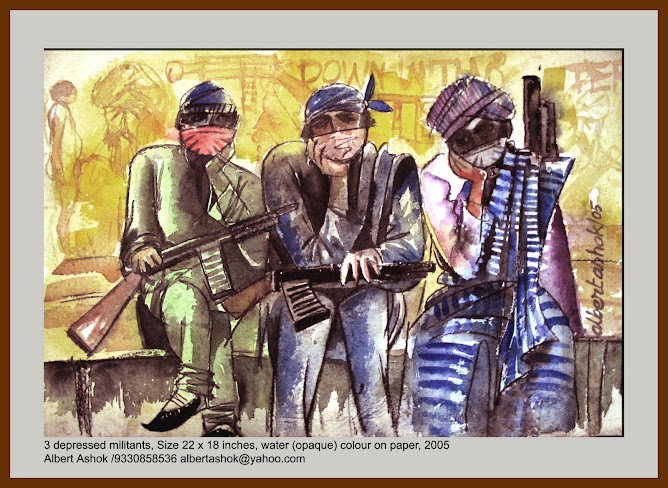
Three Depressed terrorists

Three Depressed terrorists
Terrorism is inhuman act, an evil concept