Wednesday, October 13, 2010

Judicial harassment stifles free expression

13 October 2010

Judicial harassment stifles free expression


IFJ
An ailing Tunisian journalist is languishing in jail on trumped up charges, while another faces two years in jail for being the target of a physical attack. This is just some of the evidence of how the authorities use the courts to crush dissent, says the IFEX Tunisia Monitoring Group (IFEX-TMG). Meanwhile, judges who dare to criticise the authorities are being uprooted from their jobs or are even having their salaries withheld, adds IFEX-TMG, which has stepped up its campaign to promote judicial independence.

Fahem Boukaddous, correspondent for the satellite channel "Al-Hiwar Ettunisi", is serving a four-year jail term for "forming a criminal association liable to attack persons." His crime was to report on protests against unemployment and corruption in the mining industry in Gafsa in 2008.

According to family sources, Boukaddous has difficulties breathing and speaking and his asthma attacks have increased. On 8 October, Boukaddous began a hunger strike to protest his prison conditions.

In a separate case, the authorities continue to harass Mouldi Zouabi, a journalist with the independent station Radio Kalima. He was attacked in April, but police decided not to charge the attacker. Instead, they are accusing Zouabi of violent behaviour and bodily harm. The case was referred to a higher court on 6 October, and he now faces up to two years in jail.

"This is more evidence of the way that a politicised judiciary is being used to silence free speech by denying yet another honest Tunisian journalist a fair trial. I'm positive that a truly independent court system would free Zouabi in a heartbeat," said IFEX-TMG chair Rohan Jayasekera.

The problem is confounded by the various forms of harassment of judges who criticise the authorities or demand that they work without government interference.

Since 2005, when IFEX-TMG started its fact-finding missions to Tunisia, the group of 20 IFEX members found that judges openly committed to judicial independence have been arbitrarily transferred from Tunis to remote locations, hundreds of kilometres away from their families.

Just this August, for instance, the secretary general of the legitimate Association of Tunisian Judges (AMT), Kalthoum Kennou, was moved from Kairouan, in the centre of the country, to the southern city of Tozeur.

Other targeted colleagues have seen their assignments outside the capital of Tunisia extended, have had their salaries withheld, or have been denied promotions.

IFEX-TMG is currently appealing to the International Association of Judges (IAJ), which is meeting next month in Senegal.

Find out what happens next on IFEX-TMG's recently launched Facebook page, where you can also join the call for Boukaddous's release as well as share the International Federation of Journalists's (IFJ's) poster to "set Boukaddous free".

Sunday, September 19, 2010

Artist Alert: August 2010‏

ARTICLE 19


Artist Alert: August 2010

Art, in any form, constitutes a key medium through which information and ideas are imparted and received. Artist Alert, launched by ARTICLE 19 in 2008, highlights cases of artists around the world whose right to freedom of expression has been curtailed and abused, and seeks to more effectively promote and defend freedom to create.

Zimbabwe: No show for atrocity

Works by popular visual artist Owen Maseko have been banned by the government of Zimbabwe, according to VOA. The series of video clips, effigies and paintings depict the ‘Fifth Brigade atrocities’ of the 1980s which claimed the lives of more than 20,000 civilians. The massacre perpetrated by Mugabe’s army has since been dismissed by the President as “a moment of madness”. As soon as the show was launched at the National Art Gallery, police closed the exhibit and arrested both Maseko and the museum’s Director, Vote Thebe. It is thought the latter will face charges under the Censorship and Entertainment Act for allowing Maseko to stage the exhibition without a licence.

Guatemala: Mayan musician tortured and killed

A Mayan musician has been found dead after being abducted on 25 August, reports FreeMuse. Leonardo Guarcax, a promoter and defender of indigenous Maya culture in Guatemala, was discovered the day after his kidnapping, bearing marks of torture on his body. For many years Guarcax had taught indigenous music and dance at the Sotzil Cultural Centre, advocating for the rights of Guatemala’s Mayan population. His death was not the first tragedy to befall the Guarcax family with his cousins, Ernesto and Carlos, meeting similar fates in May 2009. Leonardo’s death is a reminder of the violence continually perpetrated against those attempting to maintain pre-hispanic culture in Guatemala.

Russia: Rapper jailed for lyrical 'hooliganism'

According to online news source, ArtInvestment.ru, Russian rap idol Ivan Alekseev has been detained and subsequently jailed for ‘hooliganism.’ On 2 August, following his band’s performance at a Volgograd concert, the town’s magistrate court sentenced the rapper to ‘administrative imprisonment’ for a period of ten days. Allegedly, law enforcers at the concert were enraged when Noize MC, Alekseev’s performing name, dedicated a song critical of the Russian police force to the festival authorities, climaxing with the chorus: “A Citizen, stop-stop, the pockets, bang-bang in the kidneys.” Attempts to pacify the police resulted in Alekseev’s immediate arrest at the end of his act.

Another Russian musician, recently interviewed by the International Herald Tribune, highlighted how music as a channel for popular dissent in his country is being marginalised. Yuri Schevchuk, lead singer in Russian rock act DDT, has been an outstanding critic of the Kremlin over three decades of song-writing and performance. The rocker claims that a broadcasting blackout on political musicians continues with a subsequent trend of self-censorship, silencing political artists.

Singapore: Book tour ends for the jolly hangman

British author, Alan Shadrake, 75, has had his planned book tour severely curtailed by accusations of criminal defamation. On landing in Singapore on 19 July, Shadrake was taken into police custody and detained for a series of interrogations. The veteran writer had flown to the city-state in order to promote his new book, Once a Jolly Hangman: Singapore Justice in the Dock. Shortly after his arrest, authorities ordered several bookstore chains to stop sales of the new title. Shadrake’s book is an expose of Singapore’s harsh judicial system, where a range of offenses carry a mandatory death penalty. The attorney general’s office has accused the author of trying to “impugn the impartiality, integrity and independence of the judiciary.” The case continues.

Austria: Chinese pressure censors gun sculpture

Following intense pressure from a Chinese delegation, a controversial UN exhibition has been censored in Vienna, reports All Voices. The Art of Peacekeeping, a monolithic fusion of decommissioned guns, reclaimed ammunition and deactivated landmines forms the centrepiece of a new show at The Vienna International Centre. The sculpture, by Sandra Bromley and Wallis Kendal, has been exhibited across the world but its current context, surrounded by photographs of violence in Tibet, led to a Chinese outcry, with complaints made to the exhibition organisers and departments within the UN. The photographs have been removed at short notice leaving the stand-alone sculpture, “We were absolutely shocked,” said Bromley. “This was done without any consultation or permission.”

Malta: The death of the artist

The Maltese Independent recently highlighted the case of Aleksandar Stankovski, a painter whose work has stirred considerable controversy in Malta and its neighbouring island of Gozo. During the celebrations that surrounded the annual Malta Arts Festival, paintings submitted by Stankovski were banned from gallery displays across the two islands, due to their nude content being labelled ‘obscene’. The ban was a sad indictment of the festival, hailed as a symbol of Malta’s pluralism and creative diversity. A local rights group, The Front Against Censorship (FAC), criticised the organisers’ decision, “Isn’t it ironic that while Malta is supposed to be celebrating culture through The Malta Arts Festival, art is still being censored?” In a dramatic response to the state censorship the FAC staged a Funeral March of Art through the capital Valetta, with participants attired in all-black, mourning the demise of Maltese art in the 21st century. The painting ban is only the latest development in a worrying trend that has marred Malta’s reputation, including the prohibition of an ‘obscene’ play and the trial of a student group for writing an ‘indecent’ story.

United Kingdom: Grassroots mown down

A Cambridgeshire festival has been crippled by continuing restrictions. The Grassroots Festival, scheduled to take place in September, was abandoned by its organisers following what they describe as aggressive interference from the local council and police. Statements on the festival’s website blame “overbearing licensing conditions” for the event’s cancellation. Mooney, one of the festival’s volunteers claimed, “They didn’t want it to happen so they played their games. They couldn’t use legislation so instead they used dirty tactics.” Constant demands for a revised programme and increased security took its toll on festival financing and repeated delays led to the event’s disbandment. Commentators said the festival’s demise reflected a common trend in local authorities using bureaucracy to stultify new events.

USA: New legal protections for video artists

A landmark legal ruling has paved the way for re-instating artists and consumers’ legal rights to legitimate use of copyrighted materials in the USA. The Electronic Frontier Foundation (EFF) reported on its victory in winning three critical exemptions to the Digital Millennium Copyright Act (DMCA). EFF’s Civil Liberties Director, Jennifer Granick, commented, “We are thrilled to have helped free jailbreakers, unlockers and vidders from this law’s overbroad reach.” The DMCA has been heavily criticised for infringing on free speech, fair use and competition through blanket restrictions on how individuals use digital material. The ruling is particularly welcome for video artists, whose legitimate re-mixing of content could previously have led to being sued.

Columbia: Local hero sings banned ballads

According to the International Herald Tribune, Uriel Henao is known in Columbia as the King of Corridos Prohibidos or ‘prohibited ballads’. His brand of rock and roll describes the exploits of guerrilla commanders, paramilitary warlords, lowly coca growers and cocaine kingpins alongside Columbia’s government forces. It is a historical encapsulation of the country’s protracted drug wars, an ode to many who have fallen in a decade of bitter internal conflicts. Henao is the most prominent purveyor of a genre that encompasses more than 600 bands in Columbia. In spite of its popularity the music is often shunned by radio stations and concert arenas for its graphic depiction of the drug wars. The flamboyant Henao carries on regardless, stating, “Colombia needs people like me to tell it the truth about what takes place in this country,” he said. “The truth sells.”

New international coalition for arts and human rights

A new coalition is beginning to take shape to bring together people and organisations worldwide that are interested in the intersection of arts, culture, human rights and social justice. The vision of a stronger and closer relationship was just one of the decisions taken during a conference attended by ARTICLE 19 titled ‘Intersecting networks & support for people using creativity to fight injustice’ organised in July by freeDimensional, a group linking art spaces to social justice movements on a global level. ARTICLE 19 is now looking at how best we can support this exciting initiative. More to follow!

NOTES TO EDITORS:

• For more information: please contact Oliver Spencer, oliver@article19.org, +44 20 7324 2500 begin_of_the_skype_highlighting +44 20 7324 2500 end_of_the_skype_highlighting

Sunday, September 12, 2010

Appeal for urgent intervention as activists are tortured for speaking out

Take action!

Appeal for urgent intervention as activists are tortured for speaking out


Abdul-Jalil Al-Singace (left) protesting human rights violations.
BCHR

IFEX member Bahrain Center for Human Rights (BCHR) is urgently calling on concerned individuals to write to the Bahrain government to end the systematic torture and imprisonment of those expressing their views, including political, religious and human rights activists. Dr. Abdul-Jalil Al-Singace, Sheikh Mohammed Habib Al-Muqdad, Sheikh Saeed Al-Nori, Abdul-Ghani Khanjjar and BCHR's Dr. Mohammed Saeed are among those who have endured brutal physical and mental torture.


In an unprecedented wave of torture, detainees have been handcuffed, blindfolded, held in solitary cells, denied food and water for long periods, hung by their hands, their legs tied and their bodies beaten until swollen and bruised, deprived of sleep, and forced to listen to the screams of others being tortured.

BCHR strongly believes these arrests are connected to the activists' work in exposing human rights violations in the country. The Bahrain government is brutally silencing voices of dissent not only by prohibiting peaceful and legitimate activities related to democratic reform, but also by punishing human rights activists for engaging in these activities.

"They beat me on my fingers with a rigid instrument; they slapped me on my ears and I was pulled by my nipples and ears by tongs, and I was hit with a rigid object on my back... to force me to sign papers I had no knowledge of what was written on them," Al-Singace told a public prosecutor.

Bahrain is currently in an unofficial state of emergency with a security campaign launched against government critics. In addition, Shiite villages have been surrounded by militias, where arbitrary searches, arrests and kidnappings continue. At least 200 people have been detained. Most detainees are being held incommunicado and denied contact with lawyers and family members.

As well, state-owned media have published articles inciting sectarian tensions and smearing the reputation of the detainees, incriminating them before they are brought to the Public Prosecution and Court. The state-owned media, particularly "Al Watan", has been targeting the past and current presidents of BCHR directly as leaders in a so-called "terrorism network", although they have not been arrested. Nabeel Rajab, BCHR President, and Abdulhadi Alkhawaja, former BCHR President, were pictured in a 1 September "Al Watan" article about the violence.

The crackdown is also targeting online activists. Blogger Ali Abdulemam, who founded Bahrain's popular BahrainOnline forum, was arrested on 4 September for allegedly spreading "false news" on the BahrainOnline.org portal. His website was shut down the next day. He is a pioneer among Arab online activists and has inspired young Bahrainis and Arabs to use the Internet to engage in spirited debate. It is believed that by the government taking control of BahrainOnline, many of the users and contributors to the online forum are now at risk of being exposed and arrested.

Please write to the Bahrain government to ask them to:
- release all the detainees and especially human rights activists who have been arrested for practicing their fundamental rights to free expression and peaceful assembly;
- immediately stop the systematic torture by the National Security Apparatus, dissolve this Apparatus, bring those responsible to a public trial and redress the victims of its violations;
- allow access to the detainees by international observers;
- allow detainees to contact and meet their families and lawyers, and access appropriate health care;
- immediately stop implementing the Anti-Terrorist Law that allows arbitrary arrests and unjust trials.

Please send appeals to:
Sheikh Hamad bin Issa Al-Khalifa
King of Bahrain
Fax: +973 176 64 587

Sheikh Khalifa bin Salman Al-Khalifa
Prime Minister
Fax: +973 1753 2839

Sheikh Khalid Bin Ahmad Al-Khalifa
Minister of Foreign Affairs
Tel: +973 172 27 555 begin_of_the_skype_highlighting +973 172 27 555 end_of_the_skype_highlighting
Fax : +973 172 12 603

Sheikh Khalid bin Ali Al-Khalifa
Minister of Justice and Islamic Affairs
Tel: +973 175 31 333 begin_of_the_skype_highlighting +973 175 31 333 end_of_the_skype_highlighting
Fax: +973 175 31 284

Permanent Mission of Bahrain to the United Nations in Geneva
1 chemin Jacques-Attenville
1218 Grand-Saconnex
CP 39, 1292 Chambésy, Switzerland
Fax: + 41 22 758 96 50.
info (@) bahrain-mission.ch

Please also write to diplomatic representations of Bahrain in your respective countries.

For more information, please visit:
Bahrain Center for Human Rights


Sample letter to country embassies in Bahrain


Sample letter to Bahrain embassy officials

Two media workers killed in bomb attack; journalist kidnapped and tortured

Two media workers killed in bomb attack; journalist kidnapped and tortured


A suicide bomber detonated explosives at a Shiite procession in Quetta, Pakistan on 3 September, triggering chaos, killing two media workers and injuring eight other journalists, report the Pakistan Press Foundation (PPF), the International Federation of Journalists (IFJ), Reporters Without Borders (RSF) and the Committee to Protect Journalists (CPJ). At least 64 people were killed and 185 injured. In a separate episode on 4 September in Islamabad, a journalist critical of the government was abducted and tortured.


Individuals at the Al-Quds rally, a protest in support of Palestinians, started firing in panic immediately after the blast. Angry protesters fired at media crews. Muhammad Sarwar, a driver for Aaj News TV, was struck by a bullet and died instantly. Aijaz Raisani, a cameraman for Samaa TV, was injured in the blast and also received two bullet wounds; he died on 6 September. Eight other reporters and cameramen were wounded. Journalists at the scene said some colleagues were wounded by the blast while others were injured by shots fired at them by demonstrators. There were also clashes with police and cars and motorcycles set on fire.

The Pakistan Federal Union of Journalists (PFUJ) pointed out that the media workers were not trained for a potentially lethal environment and no protective gear was given to them.

The next day, Umer Cheema, an investigative reporter for the English daily "The News", was kidnapped by 12 men wearing police uniforms in Islamabad. He was handcuffed and blindfolded, taken to an unknown place, stripped naked, beaten and hung upside down. The abductors warned him to stop writing about the government and threatened to target his colleague, editor Ansar Abbasi.

"The News" is highly critical of President Asif Ali Zardari and its journalists are often under attack, says RSF. The government has withdrawn state advertising from the entire Jang media group, which owns "The News".

Two targeted killings of journalists in two days; 230 journalists killed during Iraq War

Two targeted killings of journalists in two days; 230 journalists killed during Iraq War


Iraqi journalists continue to be killed with impunity even after US combat troops withdraw from Iraq. Journalist Riad Al-Saray was killed this week.
ANHRI
Violence against journalists continues after the formal withdrawal of United States combat troops from Iraq in August. An Iraqi journalist was shot dead this week on his way to Karbala in southern Iraq when gunmen travelling in another car fired at him, report the Arabic Network for Human Rights Information (ANHRI), the International Federation of Journalists (IFJ), the Committee to Protect Journalists (CPJ) and Reporters Without Borders (RSF). The next day, a television journalist was gunned down outside his home in Mosul. RSF has released a survey of media deaths during the US Army's presence in Iraq, "The Iraq War: A Heavy Death Toll for the Media".

Journalist Riad Al-Saray, 35, was killed in the early morning in western Baghdad on 7 September, according to local group Journalistic Freedoms Observatory (JFO) and IFEX members. "We are concerned that journalists are once again becoming easy prey in the renewed violence which has rocked Iraq in recent days," said IFJ.

Al-Saray was an anchorman for Al-Iraqiya television, which belongs to the Iraqi Media Network, and wrote columns for a number of local newspapers. He joined Al-Iraqiya in 2005 and hosted programmes that sought to reconcile Shiites and Sunnis. At least 14 other Iraqi Media Network journalists have been killed since 2003.

Then, on 8 September, Safaa Al-Dine Abdul Hameed, a presenter for Al-Mosuliyah TV station was killed as he left home for work.

Just weeks after the US Army's last combat brigade withdrew from Iraq in August, RSF issued a report examining the country's seven years of occupation by the coalition forces and the impact on press freedom. RSF focused on journalists who were killed during the conflict simply because they wanted to do their jobs, noting the impunity in 99 percent of the murders of journalists and media workers since the invasion in 2003.

RSF also re-examined the more than 93 cases of journalist abductions during the war; at least 42 were later executed. Iraqi journalists were also frequently suspected of collaborating with insurgent groups and arrested, either by the newly established Iraqi administration or the US Army.

RSF concludes, "Although the US intervention in Iraq put an end to Saddam Hussein's regime and paved the way for a major expansion of the Iraqi media, the human toll of the war, and the years of political and ethnic violence which followed, were nothing short of disastrous – too many people died."

The number of media contributors killed in the country since the conflict began stands at 230, more journalists killed than at any time since the Second World War. That is more than the number of journalists killed during 20 years of the Vietnam War or the civil war in Algeria.

Sunday, July 25, 2010

Venezuela: Supreme Court Restricts the Right to Information

23 July 2010

Venezuela: Supreme Court Restricts the Right to Information

The Supreme Court of Venezuela ruled, in a biding decision, that a plaintiff must explain the reasons for requiring public information, which also must be limited to the scope of the intended use. ARTICLE 19 condemns the ruling and calls on the Venezuelan Government to conform their practices to international standards.

Asociación Espacio Público had appealed to the Constitutional Court following the refusal by the Office of the Comptroller General to disclose the salaries of its public officials. In its 15 July ruling, the court argued that such disclosure would violate the officials’ constitutional right to privacy.

The acceptance of the right to information will sometimes require balancing with other rights. However, best practices around the world have indicated that the public interest resulting from transparency and openness of public accounts takes precedence over the rights of civil servants to keep their salaries confidential. Also, there are ways to disclose the salaries of officials by ranks, while preserving their identity.

Furthermore, the right of access to information is based on the assumption that information held by public institutions is the property of the public, so there should be no obligation placed upon the public to explain why they need the information requested.

The right to information fosters accountability and efficiency in governments by allowing civil society groups to participate in public affairs, not only monitoring salaries, but also public policies.

ARTICLE 19 calls on the Venezuelan government to refrain from demanding the reasons behind information requests and from limiting the amount of information disclosed. We also urge the Venezuelan authorities to adopt a progressive jurisprudence on the right to information, highlighting clearly the prevalence of public interest and the proactive disclosure of public information.

NOTES TO EDITORS:

• For more information please contact: Arthur Serra Massuda, arthur@article19.org, +55 11 3057 0042.

Thursday, July 15, 2010

India - Kashmir: Journalists barred from reporting on demonstrations; journalist slain

India - Kashmir:

Journalists barred from reporting on demonstrations; journalist slain


Indian troops crack down on Kashmiri journalists.
via AP
Weeks of anti-India street protests have left 15 people dead in Indian-controlled Kashmir and authorities are striking hard with a complete lockdown on local coverage of the unrest. Local journalists have been beaten by police and barred from covering the government crackdown on demonstrators, and thousands of police have been deployed in the region to enforce a curfew, report the Committee to Protect Journalists (CPJ) and the International Federation of Journalists (IFJ). Authorities have also attempted to control the flow of information by shutting down publications and confiscating newspapers prior to distribution. At the same time, in two other states, a journalist was killed and an editor arrested.

Widespread demonstrations began in early June in the Kashmir Valley, and cities have been under curfew for several days. Curfew passes issued to journalists last week were cancelled. New passes were then issued to a few editors and senior journalists.

But on 9 July, BBC Urdu service journalist Riaz Masroor was stopped at a police check point and beaten as he was on his way to collect his curfew pass. And on 6 July, at least 12 photographers and cameramen working for local, national and international media suffered serious injuries after being assaulted by security forces trying to stop them from recording the demonstrations. Some had their equipment confiscated. "Senior police officers were heard remarking that without media attention the demonstrations would soon lose momentum," reports IFJ.

Many of the area's more than 60 newspapers decided to suspend publication because of the small number of curfew passes issued to staff and continued attacks on media.

In the region of Jammu, authorities sealed the premises of three publications on 2 July alleging they had carried false news reports that aggravated tensions between religious communities. The next day, two newspapers in English and Urdu, were seized. Text-messaging services remain suspended and telephone services are frequently disrupted in the Kashmir region.

But not all journalists are being denied access. Journalists flying in from Delhi, the capital, are being given armed protection and considerable freedom of movement, while local journalists are confined to their homes under curfew, say IFJ and CPJ. "The story of the ongoing troubles in Kashmir needs to be told," IFJ said. "But it also should be told by journalists based in Kashmir."

Government forces have arrested dozens of suspected separatists and activists, say news reports.

Meanwhile, in the southern Indian state of Andhra Pradesh, freelance journalist Hem Chandra Pandey was killed on 2 July while covering an armed conflict between police and Maoist cadres of the Communist Party of India. Pandey had travelled to Nagpur to interview the leader of the party. He "was well within his rights in seeking to interview an insurgent leader, especially in the context of ongoing peace moves," said IFJ.

And in another southern state, Kerala, magazine editor T.P. Nandakumar was arrested on defamation charges on 3 July after writing about an Indian businessman, who is a resident in the Gulf emirate of Abu Dhabi. Nandakumar was under court injunction not to publish any material on the businessman, the complainant. His arrest came after an article was posted on the "Crime Magazine" website. Nandakumar was released on bail the next day.

"Crime Magazine" is widely read because of its coverage of alleged misdeeds of several major political parties in the state, having a significant political impact.

Source : http://www.ifex.org/india/kashmir/2010/07/14/lockdown_slain/

Tuesday, June 29, 2010

Pakistan against Free Speech

Pakistan is with a few other countries in Asia, uncivilised , root of corruption/violence /terrorism. Its policy keeps people illiterate, ignorant and helpless. It gags who protest for a fair deal. and violates International Law. Look back to its History.It survives on compassion of other countries. UN should do something for its People.


Pakistan poised to vote on restricting media

http://news.bbc.co.uk/2/hi/world/south_asia/10452194.stm
Pakistani Prime Minister Yusuf Raza Gillani Pakistan's PM said that he would remove restrictions

Pakistan is poised to clamp down on the country's independent media industry.

The government has introduced a bill in parliament which, if passed, would usher in harsher regulations for broadcasters and online organisations.

It seeks to amend a law enforced by Pakistan's former military ruler, Gen Pervez Musharraf, in a bid to regulate parts of the media.

Political analysts fear the government is using the law to rein in broadcasters critical of its policies.

The bill, which targets radio and TV and some online news services, is likely to be voted on within days.

The extent to which new media will be affected by the proposed law is unclear, while print remains unaffected.

The current government, led by the Pakistan Peoples Party, has sought to placate censorship fears by claiming that it is diluting the harsher methods introduced by the former dictator.

"We are introducing the bill after disposing of those parts introduced by Musharraf," Belum Hasnain, chairwoman of the parliament's media committee said in a statement.

'Reining in TV'

The committee has to vet the bill, known as the Pakistan Electronic Media Regulatory Act, before parliament votes on it.

Ms Hasnain said the bill would remove restrictions on the media, as promised by Prime Minister Yusuf Raza Gillani in his inaugural speech.

However, political analysts believe that the government is using the law to rein in local television channels which have grown highly critical of its policies.

According to the bill, broadcasters in Pakistan will be banned from showing images or programming of suicide bombings, terrorists or the bodies of victims of terror attacks.

They will also be prevented from showing related material.

Further, they will not be permitted to broadcast statements by militants or extremists, or activities deemed to be connected with the spread of militancy and extremism.

The broadcaster will also be bound to assure the government that none of its programmes will promote hatred or militancy.

In addition, the law states that programmes opposing the ideology, sanctity, independence and security of the state of Pakistan cannot be broadcast.

Companies that violate the law will have their licences cancelled. They can also be fined up to 10 million rupees ($117,647; £78,740) and jailed for three years.

The bill is likely to raise questions about the government's policy on freedom of speech and dissent, which has hardened considerably over the past three months.

Pakistan has recently blocked several internet sites for allegedly promoting blasphemous content. It has also started monitoring of search engines and email providers including Google, Yahoo and Hotmail.

The electronic media regulatory bill is likely to be presented for vote before the parliament in a few days.

~~~~~~~~~~~~o~~~~~~~~~~~~~~~

Pakistan to monitor Google and Yahoo for 'blasphemy'

http://news.bbc.co.uk/2/hi/world/south_asia/10418643.stm
Google website - file Pakistan says the main website will be unaffected

Pakistan will start monitoring seven major websites, including Google and Yahoo, for content it deems offensive to Muslims.

YouTube, Amazon, MSN, Hotmail and Bing will also come under scrutiny, while 17 less well-known sites will be blocked.

Officials will monitor the sites and block links deemed inappropriate.

In May, Pakistan banned access to Facebook after the social network hosted a "blasphemous" competition to draw the prophet Muhammad.

The new action will see Pakistani authorities monitor content published on the seven sites, blocking individual pages if content is judged to be offensive.

Telecoms official Khurram Mehran said links would be blocked without disturbing the main website.

Cartoon controversy

The ban on Facebook was lifted after about two weeks, when the site blocked access to the page, called Everybody Draw Muhammad.

Protesters condemn a page of Facebook - May 2010 The Draw Muhammad page on Facebook sparked protests in Pakistan

Facebook itself is not on the new list of websites to be monitored. A number of links from YouTube will be blocked but not the main site itself.

Many Muslims regard depictions of Muhammad, even favourable ones, as blasphemous.

In 2007, the government banned YouTube, allegedly to block material offensive to the government of Pervez Musharraf.

The action led to widespread disruption of access to the site for several hours. The ban was later lifted.

~~~~~~~~~~~~~~~o~~~~~~~~~~~~~~~~~~~


Pakistan blocks access to YouTube in internet crackdown

http://news.bbc.co.uk/2/hi/world/south_asia/10130195.stm
Women supporters of Islamic political party Jamaat-e-Islami hold a  placard during a protest against Facebook in Karachi May 19, 2010. Many Pakistanis are angry at the 'Draw Muhammad' competition

Pakistan has blocked the popular video sharing website YouTube because of its "growing sacrilegious content".

Access to the social network Facebook has also been barred as part of a crackdown on websites seen to be hosting un-Islamic content.

On Wednesday a Pakistani court ordered Facebook to be blocked because of a page inviting people to draw images of the Prophet Muhammad.

Some Wikipedia pages are also now being restricted, latest reports say.

Correspondents say it remains to be seen how successful the new bans will be in Pakistan and whether citizens find a way round them.

Because YouTube is a platform for free expression of all sorts, we take great care when we enforce our policies.

YouTube statement Pakistanis divided over bans

YouTube says it is "looking into the matter and working to ensure that the service is restored as soon as possible". The site was briefly blocked in Pakistan in 2008 - ostensibly for carrying material deemed offensive to Muslims.

Facebook said on Wednesday that the content did not violate its terms.

There have been protests in several Pakistani cities against the Facebook competition.

'Derogatory material'

The Pakistan Telecommunications Authority said it had ordered internet service providers to "completely shut down" YouTube and prevent Facebook from being viewed within Pakistan.

It said the move came only after "all possible avenues" within its jurisdiction had been used.

Analysis

Zoe Kleinman

Countries, companies and even individuals can easily block various websites if they choose. China has a notorious firewall in place to control internet activity and many Western organisations choose to block access to social networks in the office.

In this case, Pakistan will probably have instructed its internet service providers (ISPs) to prevent any pages containing the phrase "youtube.com" in the address from loading on web browsers.

There are various ways of implementing a block and sometimes it can go awry - Pakistan accidentally pulled YouTube offline around the world in 2008 when it tried to implement an internal ban by "hijacking" the youtube.com address in order to re-direct links to a different page.

There are also ways to duck underneath a ban - most commonly by accessing the internet via a "proxy" server based abroad. This can fool an ISP into thinking a computer is actually based in another country and therefore not subject to the ban.

"Before shutting down (YouTube), we did try just to block particular URLs or links, and access to 450 links on the internet were stopped," said PTA spokesman Khurram Ali Mehran.

"But the blasphemous content kept appearing so we ordered a total shut down."

One of the links blocked is to a BBC News website article about Pakistani soldiers apparently beating Taliban suspects in a video posted on Facebook.

A YouTube spokesperson said: "YouTube offers citizens the world over a vital window on cultures and societies and we believe people should not be denied access to information via video.

"Because YouTube is a platform for free expression of all sorts, we take great care when we enforce our policies. Content that violates our guidelines is removed as soon as we become aware of it."

The controversy began with the Facebook feature called "Everybody Draw Muhammad Day". Depictions of the Prophet are forbidden in Islam.

A message on the item's information page said it was not "trying to slander the average Muslim".

"We simply want to show the extremists that threaten to harm people because of their Muhammad depictions that we're not afraid of them."

The page contains drawings and caricatures of the Prophet Muhammad and characters from other religions, including Hinduism and Christianity.

"Such malicious and insulting attacks hurt the sentiments of Muslims around the world and cannot be accepted under the garb of freedom of expression," Pakistani foreign ministry spokesman Abdul Basit said about the page.

Facebook said in a statement that it would take action if any content "becomes an attack on anyone, including Muslim people", but that in this case its policies were not violated.

"Facebook values free speech and enables people to express their feelings about a multitude of topics, even some that others may find distasteful or ignorant," the statement said.

A hotline has been set up in Pakistan, asking members of the public to phone in if they see offensive material anywhere.

Islamic parties say they are planning nationwide protests in Pakistan.

Five people were killed in the country in 2006 during violent demonstrations following publication of Muhammad cartoons in a Danish newspaper.

BBC website readers have been telling us what they think of the ban. Here is a selection of their comments.

I am a university student and use Facebook and Youtube as a way of interacting and staying in touch with friends. But all students are willing to give up this source of entertainment for the sake of principles.

Zahara Sohail Khan from Lahore, Pakistan

The strict policies of Facebook regarding racism and harassment are only for individual users. Now a page on Facebook is harassing billions of Muslims world-over and Facebook's management is not bothered. What hypocrisy.

Maroof from Lahore, Pakistan

I am a Muslim girl, just a normal student. When my religion is insulted, it is me who is insulted. I can live without Facebook but I definitely cannot live in humiliation. I am with my country on this and if Facebook does not take action on this, then ban or no ban, I would never go back to it anyway.

Maham Tanveer from Rawalpindi, Pakistan

As a Muslim growing up in America, I am frustrated that neither side takes the time to understand the other. For Muslims, directly insulting the sacred is beyond petty 'freedom of speech' privileges we mortals have. In the West, people think arrogantly that they are free to say anything without limits whatsoever, no matter how ridiculous or insulting.

Qureshi from Florida, USA

I am now living in Karachi, Pakistan, and I never thought I'd have to endure blocks on websites ever again after I moved from Saudi Arabia. Even though I have found a way to access blocked websites, I can't believe the government would put a ban on them.

Omar from Saudi Arabia

I did use Youtube and Facebook but I have removed my accounts from both sites and have communicated this to all my family and friends who have been using them.

Hassan Mehmood from Pakistan

This is ridiculous. I find these to be ill-advised measures. Blocking websites in countries does not prevent the content from existing in the first place. I think the Pakistani government should move to ban pornography (which is still easily available) before they ban Facebook and YouTube which are obviously on the better side of human development.

Myra from Karachi, Pakistan

This has been outrageous and infuriating. I feel disconnected from the world, from my friends, and from the easiest modes of expression available today.

Uzma from Lahore, Pakistan

It is not only Facebook and YouTube which have been blocked in Pakistan, but parts of the BBC website too, for example the link given below, many stories about Pakistan and the entire South-East Asia section. In fact, I am forced to use a proxy server just to post this comment. As a Pakistani, I feel very frustrated and angry about this crackdown on the internet and can only hope that this is temporary.

Schyan Zafar from Pakistan

Know more about Pakistan : http://news.bbc.co.uk/2/hi/south_asia/country_profiles/1157960.stm

  • Full name: Islamic Republic of Pakistan
  • Population: 180.8 million (UN, 2009)
  • Capital: Islamabad
  • Largest city: Karachi
  • Area: 796,095 sq km (307,374 sq miles), excluding Pakistani-administered Kashmir (83,716 sq km/32,323 sq miles)
  • Major languages: English, Urdu, Punjabi, Sindhi, Pashto, Balochi
  • Major religion: Islam
  • Life expectancy: 66 years (men), 67 years (women) (UN)
  • Monetary unit: 1 Pakistani Rupee = 100 paisa
  • Main exports: Textile products, rice, cotton, leather goods
  • GNI per capita: US $980 (World Bank, 2008)
  • Internet domain: .pk
  • International dialling code: +92
------------------------------------------
This blog is non-comercial , informative and published materials. for education and information purpose. help finding wrong information will be corrected

Kenya: against Harmful Speech

28 June 2010

Kenya: Timely National Conference on Freedom of Expression and Regulations against Harmful Speech

On 17-18 June, over 25 experts and 150 stakeholders from key national reform agencies, the United Nations, and civil society organisations including ARTICLE 19 debated the values and limits of freedom of expression and regulations against harmful speech in Nairobi, Kenya. Kenya has witnessed repeated ethnic violence during general elections and national referenda from 1992 to the present.

The conference was organised by ARTICLE 19 Kenya & Eastern Africa together with the National Cohesion and Integration Commission. It came on the heels of recent prosecutions against political leaders charged with hate speech and incitement to violence in the conduct of their campaigns against the proposed Constitution of Kenya. The new draft constitution will be the object of a national referendum on 4 August 2010.

The Conference sought to move the acrimonious debates to a sounder international human rights basis, through a focus on Article 19 and Article 20 of the International Covenant on Civil and Political Rights (ICCPR) and Article 9 of the African Charter on Human and Peoples’ Rights. The conference created a platform for technical readings and debates on freedom of expression and its permissible restrictions under the international human rights law. It also offered an opportunity to assess whether Kenyan hate speech regulations – particularly the National Cohesion and Integration Act, Section 13, Penal Code, Media Act, Kenya Communications Act and the Broadcasting Regulations – meet international standards.

The meeting was opened by Michael Hasenau, Deputy Head of Mission, German Embassy; Dr Mzalendo Kibunjia, Chairperson of the National Cohesion and Integration Commission in Kenya; and Dr Agnes Callamard, Executive Director, ARTICLE 19.

“The rights to freedom of expression, equality and freedom from discrimination are universal and mutually reinforcing. They transcend ethnic, racial and cultural specificities. It does mean that censorship is not only a violation to freedom of expression. It also violates the right to equality and to be free from discrimination. Hate speech and incitement to violence strives on censorship, says Callamard.

Some of the key points highlighted by the experts included:

• A recognition that incitement and advocacy to hatred on the basis of sex, ethnicity, race, disability, age or religion must be prohibited (it is an obligation placed on states under international human rights law). However such restrictions must be provided in law, meet a legitimate aim, such as to protect the rights and reputations of others, and be necessary to a democratic society

• There is convergence between freedom of expression (as provided for by Article 19 of ICCPR) and the restrictions imposed by Article 20. Hate speech is “valueless speech and therefore not protected in international law”

Restrictions of freedom of expression should be clearly and narrowly defined to ensure that they are not overbroad, and do not restrict legitimate speech or go beyond the scope of harmful speech

Kenya has adopted a number of legislations prohibiting any advocacy of national racial, ethnic or religious hatred that constitutes incitement to discrimination, hostility or violence. However, there is still need for the state authorities to review and harmonise laws on hate speech to ensure they conform to acceptable international standards

There was general agreement that there was no need for an additional legislation on hate speech in Kenya, but the need for testing the effectiveness of current legislation through litigation and norm-setting, including by the National Cohesion and Integration Commission

There were debates as to the role played by the criminalisation of hate speech; for some it sets a society’s normative standards and may have an educational function. But we need to consider a range of sanctions against hate speech, not only those resulting in a restriction of freedom of expression. We need to take into account possible misuse of criminalisation, including against minorities, marginalised groups and those expressing political dissent

A series of other mechanisms and options should be considered, such as those aiming at strengthening the participation of all minorities to the public and political life of Kenya; strengthening human rights education and knowledge, for example on religion; protecting minority and community media; ethical journalism and particularly reporting in a multi-ethnic, and multi-cultural society; intra-ethnic and intra-religious dialogue; meaningful and enforceable code of conduct for MPs and political leaders

The 2005 UNESCO Convention on the Protection and Promotion of the Diversity of Cultural Expressions and the 2001 UNESCO Declaration on Cultural Diversity and the African Commission on Human and Peoples’ Rights’ Declaration of Principles on Freedom of Expression in Africa should be promoted.

Hate speech regulations are required under international law. But we must be aware that this is a blunt instrument, which must be implemented carefully and wisely. In too many places around the world, hate speech regulations are used to prohibit legitimate speeches and political dissent. We must allow for a range of policies and best practices to guide interventions in Kenya,” says Callamard.

“We admit that the National Cohesion and Integration Commission Act was quickly assembled and some aspects of it may have been left out as has been pointed by the various speakers during the conference, especially that fact that the borderline between freedom of speech and hate speech is very thin and care must be taken to balance the two issues,” Dr Mzalendo Kibunjia, the Chairman of the NCIC notes.

“I appreciate that such discussions are essential because, talking about the hate speech is an important step towards solving the issue of hate speech in this country. The debates during the conference therefore produce an introductory and broad framework to facilitate future interventions on the issue without necessarily infringing on other freedoms” he adds.

All participants to the conference emphasised the need for a continued dialogue and exchange on the issues of freedom of expression, equality and non-discrimination to build on the Conference key findings.

FURTHER INFORMATION:

• For more information please contact: Victor Bwire, Programme Officer, ARTICLE 19 Kenya/Eastern Africa, victor@article19.org, +254 20 3862230/2.

Thursday, June 10, 2010

Bangladesh : Hundreds of police shut down pro-opposition newspaper

9 June 2010

Hundreds of police shut down pro-opposition newspaper


An opposition newspaper was forced to close in Bangladesh last week after the government cancelled its license to publish and sent 200 police to raid its printing press in the middle of the night, report the Committee to Protect Journalists (CPJ), ARTICLE 19, the International Press Institute (IPI) and other IFEX members. The acting editor of the paper was arrested on fraud charges.

The Bengali-language daily "Amar Desh", based in the capital, Dhaka, is known for being close to the opposition Bangladesh National Party (BNP) and is often critical of the government. In recent months, editor Mahmudur Rahman wrote editorials and articles documenting extra-judicial killings and maladministration by officials connected to Prime Minister Sheikh Hasina, says Index on Censorship.

In an interview with Index on Censorship in the hours before his arrest, Rahman said: "We are the third largest national daily and have the second largest Internet readership... I have in my journalism exposed the government's record on corruption and human rights abuses extensively, in recent days we have seen a high number of custodial deaths."

At the time of the raid, anti-government protesters and journalists tried to prevent police from entering the building. Staff members blocked the entrance, saying the editor would be arrested "over their dead bodies," reports IPI. The police broke through "a human barricade of newspaper staff," to seize Rahman. Newspapers for 2 June were confiscated.

Rahman was granted bail on charges of fraud, but was kept in custody on separate charges filed against him and colleagues at the newspaper for obstructing police. According to Reporters Without Borders (RSF), several journalists were injured during the raid and five journalists were charged with violence.

Rahman was the energy advisor to former Prime Minister Khaleda Zia when her Bangladesh National Party (BNP) led a four-party alliance government from 2001 to 2006. He is the major shareholder of "Amar Desh" and has been acting editor since 2008. Newspaper staff have been charged with more than 20 counts of criminal defamation linked to articles about the ruling Awami League party, which came to power in December 2008.

The state is cracking down on press freedom to curb criticism of its policies, says RSF. "The Awami League government is clearly unable to tolerate criticism from this opposition newspaper and, in particular, its coverage of the controversial award of energy contracts to foreign companies."

In April, the Bangladeshi government banned the country's only private television station, the pro-opposition Channel One. On 1 June Facebook was blocked. RSF reports that it was restored on 5 June following the social-networking website's agreement to withdraw cartoons of Mohammed as well as cartoons of certain Bangladeshi politicians that were considered offensive. Mahbub Alam Rodin, a young man who had allegedly posted the satirical images, was arrested for insulting the country's leaders.


More Info : http://news.yahoo.com/s/afp/20100602/wl_sthasia_afp/bangladeshpoliticsmedia_20100602113722


Bangladesh shuts down pro-opposition newspaper AFP/File – A Bangladeshi Army soldier reads a newspaper on top of an armoured vehicle in Dhaka in 2009. Bangladesh …

DHAKA (AFP) – Bangladesh shut down a pro-opposition newspaper and arrested its editor on fraud charges, police said Wednesday, after storming the paper's offices in a late-night raid.

Mahmudur Rahman, acting editor of the Bengali-language Amar Desh and one of the government's most vocal critics, was arrested after police broke through an improvised barricade set up by the paper's journalists.

"He has been arrested on charges of fraud and defamation," local police chief Mahbubur Rahman told AFP.

The arrest came hours after the authorities cancelled the paper's publication rights, allegedly because the publisher, Hashmat Ali, had filed a case with the police.

"The publisher has said he was no longer responsible for Amar Desh and it was being printed illegally. He has filed a fraud case with police," government official Muhibul Haque told AFP.

But local media reports quoted the publisher's family as saying Ali has been picked up by intelligence officials and detained.

Rahman, a stalwart of the main opposition Bangladesh Nationalist Party (BNP), claimed Ali, who also supported the BNP, had been forced to sign the fraud papers prepared by the government's intelligence services.

"Police stormed the office and beat several journalists before picking up Rahman on Wednesday morning," said Zahed Chowdhury, city editor of Amar Desh.

Rahman has been a vocal critic of the current Awami League government since it swept to power in December 2008 elections.


Wednesday, June 2, 2010

Israeli Defence Forces assault flotilla of activists and journalists, impose media blackout

2 June 2010

Israeli Defence Forces assault flotilla of activists and journalists, impose media blackout


Israeli forces raided a flotilla of activists on its way to deliver  aid to the Gaza Strip; 60 journalists were on board.
Israeli forces raided a flotilla of activists on its way to deliver aid to the Gaza Strip; 60 journalists were on board.
via EPA
At least nine people were killed and dozens wounded when an Israeli warship intercepted and raided a flotilla of activists attempting to deliver 10,000 tons of aid to Gaza on 31 May. Around 60 journalists were reportedly on board. More than 600 people from 42 countries, including journalists, activists and artists, have been arrested since the raid unfolded in international waters. Shortly after the assault, Israeli authorities launched an information blackout, blocking cellphones and barring journalists from covering the attack, report the Palestinian Center for Development and Media Freedoms (MADA), ARTICLE 19, Reporters Without Borders (RSF) and other IFEX members.

The convoy of boats in the Freedom Flotilla, led by the Free Gaza Movement and Turkish organisation Insani Yardim Vakfi, set out from Turkey on Sunday afternoon reported "The New York Times". Israel ordered the convoy to abort its mission; the vessel refused to dock at an Israeli port. Then, naval commandos were dropped aboard the Turkish ship, intending to commandeer the vessel. Now the raid's brutal consequences have thrown a spotlight on Israel's policy of blockading Gaza, say news reports.

ARTICLE 19 is calling for an independent investigation into the Israeli Defence Forces (IDF) use of lethal force: "It should focus on the legality of the Israeli assault in international waters and thus the legality of the blockade, and the proportionality of the use of force." In a submission to the United Nations 14th Human Rights Council, the Cairo Institute for Human Rights Studies (CIHRS) called upon the United Nations today to conduct an immediate investigation into the attack.

The same day, an Al Jazeera TV crew was attacked by Israeli citizens in the port of Ashdod after the defence minister gave a news conference about the attack, reports RSF. Many of the journalists on the flotilla have been out of contact since the raid. According to the International Press Institute (IPI), journalists on board reported the jamming of electronic devices as the raid occurred. Israeli forces arrested at least 20 journalists aboard the flotilla; three have since been released, reports the Committee to Protect Journalists (CPJ). RSF says 16 journalists are still being held at Be'er Scheva detention centre, and that journalists are among the 300 people being deported through the airport today.

Israeli forces have also attempted to curb criticism by targeting journalists in other recent incidents. According to RSF, at least three Palestinian journalists were assaulted by Israeli soldiers in the West Bank last month, and more than 30 journalists have been attacked by the IDF this year. Soldiers fired tear gas at a cameraman covering protests against the Israeli separation wall in Beit Jala on 23 May, while another correspondent was targeted with tear gas for covering wall protests on 14 May. MADA reports that a Palestinian cameraman covering clashes between settlers and Palestinian youth on 29 May was beaten by security forces after stones were thrown at him by settlers.

Israeli authorities routinely target prominent rights defenders. A joint action spearheaded by CIHRS, with 23 other organisations, has condemned the arrest of rights defender Ameer Makhoul on 6 May. Makhoul has been active in exposing racist practices and abuses against Arab Israelis. A gag order was placed on his arrest until 27 May, reports I'lam: Media Center for Arab Palestinians in Israel, which was concerned about the "conditions of his detention, including allegations of torture."

Free Speech Campaigners in London Protest Against Continued Persecution of Jailed Editor


logologo logo logo

For immediate release – 2 June 2010

Free Speech Campaigners in London Protest Against Continued Persecution of Jailed Editor

Freedom of expression campaigners will protest on Thursday 3 June outside the Azerbaijani embassy in London, calling for an end to the persecution of jailed journalist Eynulla Fatullayev.

Amnesty International UK, ARTICLE 19, English PEN and Index on Censorship will also hand in a letter to the embassy – signed by key literary figures including Monica Ali, Alan Ayckbourn, William Boyd, and Philip Pullman - calling for Fatullayev’s immediate release and for new politically-motivated charges against him to be dropped.

Newspaper editor Fatullayev, 33, is currently serving an eight-and-a-half year prison sentence based on trumped-up charges of terrorism and defamation. In April this year the European Court of Human Rights (ECtHR) ruled that he had been wrongfully imprisoned for exercising his right to freedom of expression and that he should be immediately released.

Despite being a party to the European Convention on Human Rights, the Azerbaijan authorities responded by questioning the court’s authority. Chingiz Esgerov, Azerbaijan’s representative to the ECtHR, argued that “the ECtHR has no authority to give orders to the courts of other countries” and “the country’s legislation does not envision the release of a prisoner only on a basis of the ECtHR.”

After the ECtHR began reviewing his case, Eynulla Fatullayev was further accused of possessing illegal drugs - a charge widely believed to have been fabricated in order to keep him in prison.

In March Eynulla’s father received a death threat for speaking out about his son. This is the third of such threats he has received.

Eynulla Fatullayev received an honourable mention before an audience of the UK’s leading journalists at last night’s Amnesty International Media Awards. In 2009 he was the recipient of the Amnesty International Special Award for Journalism Under Threat.

Amnesty International UK Director Kate Allen said:

“The continuing imprisonment and persecution of Eynulla Fatullayev brings shame on Azerbaijan. It’s amazing that the authorities are so scared of the words of one journalist that they would damage their international standing in this way, even questioning the authority of the European Court of Human Rights.”


ARTICLE 19 Executive Director Agnès Callamard said:

“It is extremely disconcerting that Emin Fatullayev has received death threats for speaking out on behalf of his son. The Azerbaijani Government has the duty to ensure the safety and security of its citizens. They should publicly condemn such threats, investigate them thoroughly, and provide adequate protection to Emin Fatullayev.”

Chair of the Writers in Prison Committee and Deputy President of English PEN Carole Seymour-Jones said:

“Eynulla Fatullayev is just a journalist doing his job. He should be released immediately and these politically-motivated charges against him should be dropped.”

John Kampfner, Chief Executive of Index on Censorship said:

“Freedom of expression is a fundamental human right which journalists, human rights defenders and all of us should be able to exercise openly and without fear of reprisals. Azerbaijan must fulfil its international obligations to guarantee this right.”

The persecution of journalists such as Eynulla Fatullayev is commonplace in Azerbaijan. The authorities have curtailed freedom of expression and have shown persistent hostility towards independent and opposition media. Journalists continue to be harassed, threatened, attacked and imprisoned for conducting their professional activities. Defamation and false charges are increasingly used to silence critical voices.


NOTES TO EDITORS:

• Demonstration details:
What: Protesters with placards demonstrating outside embassy and handing in letter to ambassador
When: 12 noon to 1pm, Thursday 3 June
Where: Opposite the Azerbaijan Embassy, 4 Kensington Court, London, W8 5D
• For more media information and interviews please contact:
§Rebecca Vincent, ARTICLE 19 Azerbaijan Advocacy Assistant, 0207 324 2509
www.article19.org
Steve Ballinger, Amnesty International UK media unit, 020 7033 1548, Out of hours: 07721 398984, www.amnesty.org.uk
Robert Sharp, English PEN Campaigns Manager, 0207 324 2538, Out of hours: 07790 420011
www.englishpen.org
Padraig Reidy, Index on Censorship News Editor, 020 7324 2526, Out of hours: 07947 242 476
www.indexoncensorship.org

Tuesday, June 1, 2010

ISRAEL: Israel needs to heed international calls for free flow of information‏

ISRAEL: Israel needs to heed international calls for free flow of information

ARTICLE 19 is calling for an open, international, independent and impartial investigation into the use of lethal force by the Israeli Defence Forces which resulted in a number of deaths onboard the Gaza-bound flotilla on 31 May.

The blocking of all communication channels, including mobile phones, shortly after the assault, followed by the arbitrary detention of journalists, human rights monitors and others who were travelling onboard the flotilla, are evidence of censorship and a news blackout by Israeli state authorities. Such actions curtail the free flow of information, as protected by Article 19 of the International Covenant on Civil on Political Rights to which Israel is party.

The one-sided information originating from official Israeli sources on the circumstances surrounding the assault and the deaths restricts the right to information and minimises the possibilities for international public scrutiny of the actions of the Israeli Defence Forces and thus for accountability.

As early as 1946, at its very first session, in the UN General Assembly adopted Resolution 59(I) which states that “Freedom of information is a fundamental human right and ... the touchstone of all the freedoms to which the United Nations is consecrated.”

Freedom of expression, including access to information, is also essential to the realization of what is commonly referred to as the “right to truth.” The UN Commission on Human Rights, at its 61st session, adopted Resolution 2005/66, which ‘‘Recognizes the importance of respecting and ensuring the right to the truth so as to contribute to ending impunity and to promote and protect human rights.’’

The investigation into the assault against the flotilla must be open, international, impartial and independent. It should focus on the legality of the Israeli assault in international waters and thus the legality of the blockade, and the proportionality of the use of force. An international investigation team should be allowed access to government-held information on the matter, as well as direct access to those involved in the assault, witnesses and those subsequently detained.

NOTES :

• For more information: please contact Mona Samari, +44 (0) 7515 828 939, mona@article19.org


----------------------------------Background news:
more info.

The Siasat Daily2010-06-01
Gaza, June 01: Israeli commandos on Monday attacked a high-profile Gaza-bound aid flotilla, killing up to 19 people and triggering in its wake a wave of outrage across the globe. The convoy of six ships was assaulted in the early hours after commandos slithered down from helicopters and confronted passengers on board, mostly pro-Palestinian activists.


http://www.examiner.com/x-27745-SF-Headlines-Examiner~y2010m5d31-Israel-Defense-Forces-IDF-Hamas-statements-on-Gaza-flotilla-violence

Israel Defense Forces (IDF), Hamas, activists statements on Gaza flotilla violence

Israel has met with protests around the world and here in the San Francisco Bay Area following its raid on a flotilla of boats headed for the Gaza Strip. Click here for a slideshow of photos related to the incident

Israel says it was defending itself after those on one of the vessels attacked its soldiers. It displayed weapons confiscated by those on board and showed video of the soldiers being attacked.

The activists onboard say that they were attacked by the soldiers after they raised the white flag of surrender and that they were simply trying to bring humanitarian aid to the Gaza Strip, which has been under a blockade imposed by Israel and Egypt since Hamas took over Gaza in 2007.

The public relations war is being fought by activists around the world through video and protests. Click here for two sets of videos with different points of view on what happened. The Israeli Consulate in San Francisco also posted YouTube videos from IDF on its Web site.

Below is the official statement from the Israel Defense Forces (IDF), after that is the official statement from Hamas. Following that is a statement from the San Francisco Bay Area based Free Palestine Movement organization.


Tuesday, May 18, 2010

Tunisia:Harassment, Intimidation of Human Rights Defenders and Journalists

17 May 2010

Tunisia: Detention of Prisoners of Opinion, Harassment, Intimidation of Human Rights Defenders and Journalists; Internet Censorship and Lack of Independence of the Judiciary


Statement delivered by ARTICLE 19 on 12 May to the 47th session of the African Commission on Human and Peoples Rights (ACHPR).

ARTICLE 19 is gravely concerned by the continued arrests, detentions and intimidations of media practitioners, human rights defenders and legal practitioners in Tunisia.

Since 2005, prior to the World Summit for the Information Society (WSIS) held in Tunisia, ARTICLE 19 joined other members of the International Freedom of Expression eXchange (IFEX) to form the 20-member Tunisia Monitoring Group (TMG).

The TMG seeks to highlight the following violations:
• Detention of Tunisian prisoners of opinion, the use of administrative sanctions to punish dissident views and the obstruction of the emergence of an independent judiciary
• Restrictions on freedom of association for peaceful purposes and the right of all civil society groups to be legally established and hold meetings in Tunisia
• Censorship of the internet, the arts, books and periodicals by legal, administrative and extrajudicial means in Tunisia.

The TMG just concluded its sixth mission to Tunisia from 25 April to 6 May 2010.

We found that despite the existence of a legislative and institutional framework guaranteeing human rights and fundamental freedoms, and the impressive economic growth, large scale human rights violations continue to take place with impunity in Tunisia.

ARTICLE 19 and other members of the TMG wish to highlight the plight of local journalists who are arrested, intimidated, harassed by plainclothes police, denied licenses to operate independent newspapers or broadcast outlets, and taken to court regularly over frivolous charges.

A notable case is that of Fourti Salah, who has been waiting for 23 years to get a reply to his application for a radio frequency. He ended up forming the Syndicate of Tunisian Free Radios with more than 20 other journalists who have no other recourse while individuals close to the government are speedily granted frequencies.

On 3 May, while the international community celebrated World Press Freedom Day, Tunisian journalists continued to face direct and indirect harassments and censorship.

Néji Bghouri, president of the legitimate National Syndicate of Tunisian Journalists (SNJT) was prevented by the police from holding a peaceful demonstration in front of the Ministry of Communications. He intended with some other colleagues to mark the day and call the attention of the government to the case of the journalist Fahem Boukadous of Al-Hiwar Al-Tunisi satellite television station, who has been sentenced to four years imprisonment for having reported on the demonstrations in the mining area of Gafsa. He returns to court on 18 May.

Other notable cases include Radio Kalima which was attacked, their material seized and their offices closed.

Zouheir Makhlouf, a contributor to news website Assabil Online and the opposition weekly Al-Mawkif spent over three months in jail for a video he produced on the pollution in the industrial zone of the Nabeul region. He was viciously beaten by police in April after being released in February.

In addition, human rights defenders and journalists are constantly harassed and intimidated at Tunis Carthage airport, unduly searched and sometimes stopped from travelling. Lotfi Hajji, correspondent of Al Jazeera was recently harassed at the airport of Tunis Carthage on his way back from Doha, as are other journalists and rights activists routinely.

Besides the violations of freedom of expression, the independence of the judiciary is hampered by arbitrariness.

The case of the judge Mokhtar Yahyaoui is an illustration of the lack of independence of the judiciary. Since 2001, Yahyaoui has been victimized for having requested a more independent working environment for the judiciary. Since then, he has been denied all basic rights such as the right to have a passport for himself and his children who are studying in Europe, his letters are read, and he is under constant surveillance. His colleagues, family and friends are intimidated and moved hundreds of kilometers away from Tunis for showing solidarity.

ARTICLE 19 and other TMG members urge the ACHPR, and the Special Rapporteur on Freedom of Expression and the Special Rapporteur on Human Rights Defenders to:
• Request the Tunisian government to stop the harassment, intimidation of journalists, human rights defenders and the use of administrative sanctions to silence dissenting views
• Stop the use of insidious tactics and instruments and sophisticated ploys to block the emergence of an independent judiciary
We further urge the ACHPR to:
• Conduct a fact finding mission to Tunisia in order to assess the critical situation of human rights defenders, legal and the media practitioners
• The mission should include civil society organizations and meet with all stakeholders in Tunisia.

This statement is endorsed by the Federation of African Journalists and the International Federation of Human Rights (FIDH).


FURTHER INFORMATION:

• For more information please contact: Amadou Kanoute, Amadou@article19.org +221 33 860 12 62

Sunday, May 16, 2010

Journalists under threat from suicide bombs, abductions and censorship

12 May 2010

Journalists under threat from suicide bombs, abductions and censorship


Pakistani journalists continue to be pushed to the edge, by suicide attacks, kidnappings and murder, as well as government officials making direct attacks on critical journalists, reports the Pakistan Press Foundation (PPF). Access to information has also been undermined with state orders to halt BBC Urdu-language broadcasts.


In a joint action spearheaded by Reporters Without Borders (RSF), 26 IFEX members and the Pakistani Federal Union of Journalists (PFUJ) have called on the leaders of the Taliban, jihadist movements and Al-Qaeda to stop suicide bombings targeting public gatherings, which result in the deaths of innocent civilians and media workers.

Pakistani journalists cover events first-hand, but that does not mean they "support any specific politician or public figure," says the joint action. The bombings have made Pakistan one of the most dangerous countries in the world for the press.

Journalists and their families are also not entirely safe in their own homes. Azaz Syed was out at work when gunmen riddled the front door of his house with bullets early on 7 May, says PPF. An investigative reporter for the English-language private television channel Dawn News, Syed has been working on stories involving the armed forces, intelligence agencies and militant organisations, as well as political parties and influential personalities in Pakistan. This is the second attack on his residence.

Meanwhile, on 27 April, the Pakistan Electronic Media Regulatory Authority (PEMRA) ordered 24 FM radio stations to stop broadcasting BBC Urdu news bulletins because they allegedly violated the terms of their licenses, reports PPF. BBC says it believes the stations have completed all the required paperwork for PEMRA to lift the ban.

In a separate deadly episode in North Waziristan, militants executed a former Pakistani intelligence official who was kidnapped along with documentary filmmaker Asad Qureshi, report the Committee to Protect Journalists (CPJ) and the International Press Institute (IPI). The official's body was found on 30 April, after going missing with the filmmaker and a second official on 26 March. Qureshi, a British citizen of Pakistani origin, was on his way to interview Taliban leaders.

More recently, 30-year-old journalist Ghulam Rasool Birhamani was reported missing on 9 May; his body was found the next day with torture marks and fatal head injuries, reports PPF. A reporter for the daily "Sindhu Hyderabad", Birhamani had recently received threats from the Lashari tribe for reporting on the marriage of an underage girl from the tribe.

Tuesday, April 27, 2010

Photos of extrajudicial killings banned

14 April 2010

Photos of extrajudicial killings banned


Art can be a powerful medium for ideas and information, to challenge repression. A photo exhibit about extrajudicial executions in Dhaka, Bangladesh, was banned on 22 March, report Human Rights Watch, Reporters Without Borders (RSF) and ARTICLE 19. The ban was revoked a week later after the gallery owner, who received death threats, appealed the decision in court.


The exhibit, "Crossfire," by Shahidul Alam, features photographs and installations relating to alleged extrajudicial killings by the Rapid Action Battalion (RAB), a military-dominated crime-fighting force. Officers often say these are "crossfire" killings in which they act in self defense or to stop alleged criminals from escaping.

Since RAB was established in 2004 it has killed more than 500 people. No one has been prosecuted for the killings. Many victims of the "cross-fire" killings have instead either been tortured to death or summarily shot. At least four journalists have been tortured by RAB members since 2007, says RSF.

Drik gallery owner and well-known photographer, Shahidul Alam, received death threats days after the exhibit was shut down. Police surrounded the gallery until they were ordered by the government to withdraw on 31 March.

ARTICLE 19 featured the Dhaka exhibit in the March edition of its "Artist Alert", which highlights cases of artists worldwide whose right to freedom of expression has been trampled. The bulletin also mentions the award-winning Iranian filmmaker Jafar Panahi who was detained along with his wife, daughter and 15 guests by Iranian security on 1 March. His wife, daughter and guests have been released, but Panahi continues to be held incommunicado in Tehran's Evin prison.

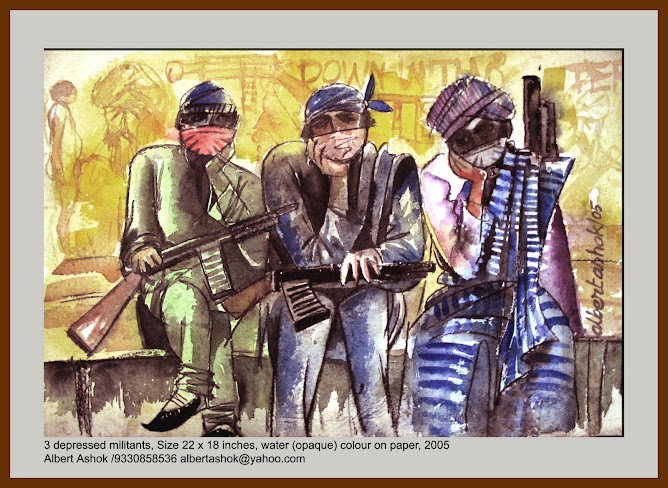
Three Depressed terrorists

Three Depressed terrorists
Terrorism is inhuman act, an evil concept